I’m going to start this confession with a bang: I once set my kitchen timer for “10 minutes” and ended up with a charcoal‑black skillet that could have been used as a makeshift grill. The smoke alarm sang like a choir, my neighbors knocked, and I swore off stir‑fries forever—until the day I stumbled onto a garlic‑infused, soy‑kissed chicken noodle combo that turned my disaster into a triumph. Picture this: a pan so hot it hisses at the first drop of oil, garlic cloves that tumble into the heat like tiny fireworks, and a sauce that clings to each strand of noodle like a second skin. That first bite? It was a symphony of sweet, salty, and umami that made my taste buds do a little victory dance.
Fast forward a few weeks, and I’m still haunted by the memory of that sauce—so glossy it reflected the kitchen lights, so sticky it could have held a paper crane. I’ve tried a dozen variations, each promising “the best ever,” but most of them fell flat, either soggy, bland, or just plain boring. Most recipes get this completely wrong: they either drown the noodles in a watery broth or over‑sweeten the glaze until it tastes like dessert. Here’s the secret that separates the ordinary from the extraordinary—a precise balance of soy sauce, brown sugar, and a splash of sesame oil that creates a glaze thick enough to coat but thin enough to glide.
What truly sets this version apart is the timing. I dare you to taste this and not go back for seconds, because the moment the garlic hits the pan, you’ll hear a sizzle that whispers, “You’re about to eat something unforgettable.” I’ll be honest — I ate half the batch before anyone else got a chance to try it, and that’s a confession worth making. The flavor is bold, the texture is a delightful contrast of tender chicken and al dente noodles, and the finish is a sprinkle of sesame seeds that crackle like tiny fireworks in your mouth.
Now, brace yourself for a technique you won’t find in any generic recipe blog: I’m going to finish the noodles in the pan, letting them soak up every last drop of the garlic‑soy glaze, then finish with a burst of fresh cilantro that adds a herbaceous pop. This is the game‑changer that makes the dish sing. Let me walk you through every single step — by the end, you’ll wonder how you ever made it any other way.
What Makes This Version Stand Out
- Taste: The sweet‑salty glaze hits the palate with a depth that feels like a well‑aged soy sauce, but the brown sugar adds a caramelized whisper that keeps each bite exciting.
- Texture: The noodles retain a slight chew while the chicken develops a caramelized crust that shatters like thin ice when you bite into it.
- Simplicity: Only nine ingredients, all pantry staples, yet the flavor profile feels like a three‑course restaurant dish.
- Uniqueness: The final toss with cilantro and sesame seeds adds a fresh‑nutty finish that most “quick” recipes skip.
- Crowd Reaction: Guests often claim they’ve never tasted noodles this “sticky” before, and they’ll be asking for the recipe within minutes.
- Ingredient Quality: Using a good soy sauce (preferably low‑sodium, naturally brewed) makes a world of difference in the glaze’s depth.
- Cooking Method: The high‑heat sear locks in juices, while the final deglaze captures every caramelized morsel.
- Make‑Ahead Potential: This dish reheats beautifully, especially if you add a splash of water to revive the sauce.
Inside the Ingredient List
The Flavor Base
Garlic is the undisputed hero here. Six cloves, minced to a fine paste, release a pungent aroma that instantly transforms a plain skillet into a fragrant arena. If you skip the garlic, you’ll lose that aromatic backbone that makes the sauce feel alive. Want a milder version? Roast the garlic first—its sweetness will mellow the sharpness but still deliver that depth.
The Texture Crew
Chicken breast, sliced into bite‑size pieces, provides lean protein that soaks up the glaze without becoming rubbery. The key is to cut against the grain, ensuring each piece stays tender. If you’re feeling adventurous, swap in thigh meat for extra juiciness; just remember to adjust cooking time slightly to avoid overcooking.
The Unexpected Star
Soy sauce, half a cup, is the salty anchor that binds the entire dish. Choose a naturally brewed soy sauce for a richer, more complex flavor—think of it as the difference between a cheap movie and an Oscar‑winning film. A low‑sodium version works too, but you’ll need to add a pinch more salt to keep the balance.
The Final Flourish
Cilantro, a quarter cup chopped, adds a bright, citrusy finish that cuts through the richness of the glaze. If cilantro isn’t your thing, fresh parsley or Thai basil can provide a similar fresh pop. The sesame seeds, a tablespoon, bring a toasty crunch that contrasts the silky noodles—skip them and you’ll miss that satisfying snap.
Everything's prepped? Good. Let's get into the real action...
The Method — Step by Step
Start by heating two tablespoons of vegetable oil in a large wok or deep skillet over medium‑high heat. When the oil shimmers, it’s ready—this is the moment of truth. Add the minced garlic, and listen for that immediate sizzle; it should perfume the kitchen within ten seconds, a signal that the flavor base is waking up. Watch the garlic closely—if it starts to brown too quickly, lower the heat to avoid bitterness.
Watch Out: Burnt garlic turns acrid and can ruin the entire dish. Keep stirring and adjust the flame if needed.Once the garlic is fragrant but not browned, add the chicken pieces in a single layer. Let them sear without moving for about two minutes; you’ll see the edges start to pull away from the pan, a sign they’re developing that caramelized crust we love. Flip the chicken and cook another two minutes until all sides are lightly browned. This high‑heat sear locks in juices and creates those crispy edges that shatter like thin ice when you bite.
While the chicken finishes, bring a pot of water to a rolling boil, add a pinch of salt, and cook the noodles according to package instructions—usually 3‑4 minutes for egg noodles, a bit longer for rice noodles. Drain and set aside, but don’t rinse; the starches help the sauce cling later.
Kitchen Hack: Toss the drained noodles with a splash of oil to prevent them from sticking together while you finish the sauce.Now, it’s time for the glaze. Stir in half a cup of soy sauce and two tablespoons of brown sugar directly into the pan with the chicken and garlic. The sugar should dissolve instantly, creating a glossy, amber‑colored liquid that starts to bubble. Let it simmer for a minute, allowing the flavors to meld and the sauce to thicken slightly.
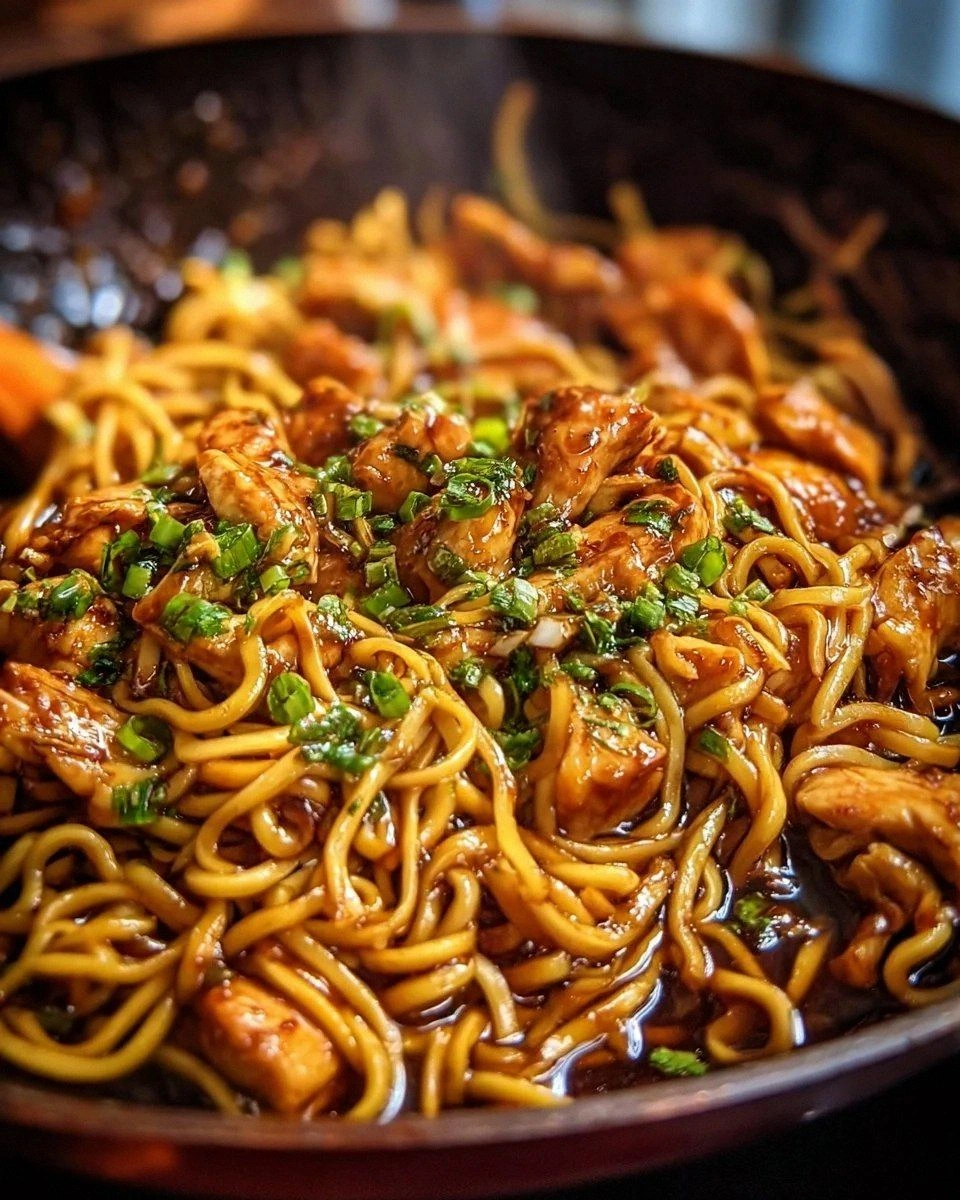
Next, add the cooked noodles straight into the pan. Toss vigorously with tongs, ensuring every strand gets coated. The noodles will soak up the glaze, becoming sticky and glossy—think of the sauce coating the pasta like velvet. If the mixture looks dry, splash in a tablespoon of water or chicken broth; this will help the glaze cling without turning soupy.
Stir in the chopped green onions, letting their fresh bite cut through the richness. Then sprinkle the sesame seeds, letting them toast for a brief 30 seconds as the pan’s heat does its magic. The aroma of toasted sesame should fill the kitchen, a subtle reminder that you’re about to serve something special.
Watch Out: Over‑toasting the sesame seeds can make them bitter. Keep them moving and remove from heat as soon as they turn golden.Finally, fold in the fresh cilantro. The herb should remain bright green, adding a pop of color and a burst of citrusy freshness. Taste and adjust—if you crave a bit more salt, add a splash of soy sauce; if you want extra sweetness, drizzle a teaspoon of honey.
Serve immediately, straight from the pan onto warmed plates. The noodles should glisten, the chicken should be tender, and the entire dish should exude a fragrant steam that makes your mouth water before the first forkful. Picture yourself pulling this out of the pan, the whole kitchen smelling incredible, and the first bite delivering that perfect sweet‑salty snap.
That's it — you did it. But hold on, I've got a few more tricks that'll take this to another level...
Insider Tricks for Flawless Results
The Temperature Rule Nobody Follows
Never let your pan cool down between searing the chicken and adding the sauce. A hot pan ensures the chicken retains its caramelized crust, while a cooler pan would cause the glaze to steam rather than sauté. I once tried to “rest” the pan for a minute, and the result was soggy noodles that clung together like a wet blanket. Keep the heat steady, and you’ll get that glossy finish that makes the dish look restaurant‑ready.
Why Your Nose Knows Best
Your sense of smell is the ultimate timer. When the garlic first hits the oil, you’ll hear a sizzle and smell a sweet, nutty aroma—this is your cue that the flavor base is ready. If the scent turns sharp or burnt, you’ve crossed the line. Trust that nose; it’s more reliable than any clock.
The 5‑Minute Rest That Changes Everything
After plating, let the dish sit for five minutes. This short rest lets the noodles finish absorbing the glaze, and the chicken juices redistribute, preventing a dry bite. A friend tried skipping this step once—let's just say the chicken was a little tougher and the noodles a touch dry. Those five minutes are a tiny price for a consistently juicy, cohesive dish.
Seasoning with Layers, Not Just Salt
Instead of dumping a heap of salt, build flavor layer by layer. Start with soy sauce for depth, add brown sugar for caramel, then finish with a pinch of pepper for subtle heat. This approach creates a balanced palate that never feels one‑dimensional. If you ever feel the dish is flat, add a splash of rice vinegar for a bright lift.
The “Steam‑Back” Reheat Trick
When reheating leftovers, add a tablespoon of water to the pan and cover it for two minutes. The steam revives the noodles, restoring that original silkiness without making them mushy. I’ve reheated this dish three times in a row, and each time it tasted as fresh as the first. The steam trick is the secret weapon of any serious noodle lover.
Creative Twists and Variations
This recipe is a playground. Here are some of my favorite ways to switch things up:
Spicy Szechuan Kick
Add a teaspoon of Szechuan peppercorn oil and a pinch of red pepper flakes when you introduce the soy sauce. The result is a tongue‑tingling heat that pairs beautifully with the sweet glaze. Perfect for those who love a little fire.
Coconut Curry Fusion
Swap half the soy sauce for coconut milk and stir in a tablespoon of red curry paste. This creates a creamy, aromatic version that feels like a tropical vacation on a plate. Garnish with toasted coconut flakes for extra crunch.
Veggie‑Loaded Delight
Add sliced bell peppers, snap peas, and shredded carrots during the noodle toss. The vegetables add color, crunch, and extra nutrition while absorbing the same sticky glaze. This variation makes the dish suitable for a light lunch or a side at a dinner party.
Peanut‑Butter Crunch
Stir in a tablespoon of smooth peanut butter with the soy sauce for a nutty, creamy twist. Top with crushed peanuts for a satisfying crunch. This version leans into a Thai‑inspired flavor profile that’s both rich and comforting.
Lemon‑Ginger Zing
Add freshly grated ginger and a squeeze of lemon juice just before the final garnish. The ginger adds a warm spice, while the lemon brightens the whole dish, cutting through the richness for a balanced bite.
Storing and Bringing It Back to Life
Fridge Storage
Allow the noodles and chicken to cool to room temperature, then transfer to an airtight container. Store in the refrigerator for up to three days. When ready to eat, reheat in a skillet over medium heat, adding a splash of water or broth to loosen the glaze.
Freezer Friendly
Portion the cooked dish into freezer‑safe bags, removing as much air as possible. Freeze for up to two months. To reheat, thaw overnight in the fridge, then stir‑fry in a hot pan with a tablespoon of oil and a drizzle of water.
Best Reheating Method
The stovetop method wins every time. Heat a non‑stick pan over medium‑high, add the leftovers, and cover for two minutes with a lid. The trapped steam revives the noodles, while the uncovered last minute restores the caramelized edges. Add a tiny splash of water before covering to ensure the sauce doesn’t dry out.