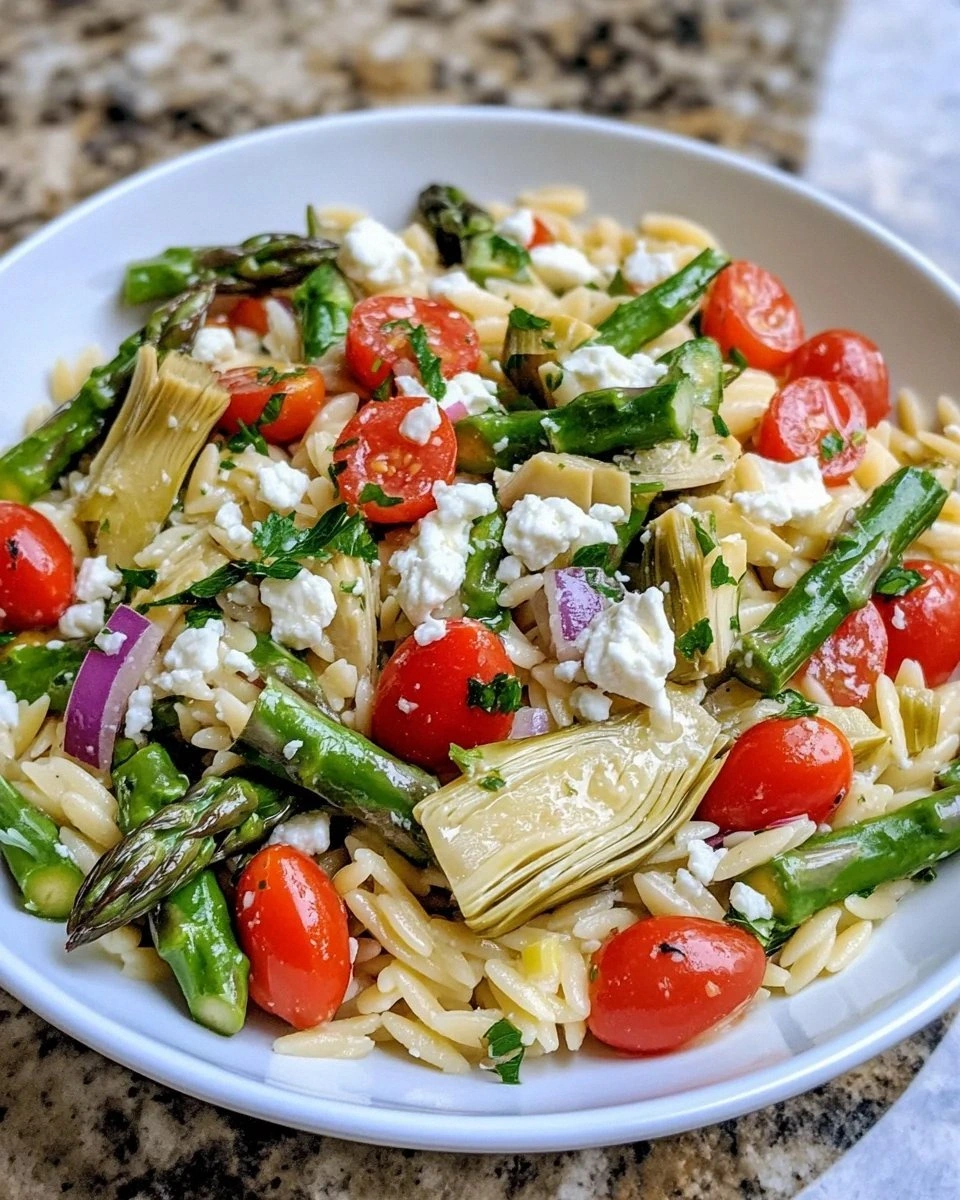
Last Tuesday I stood in my kitchen at 11:47 p.m., fork in hand, hovering over a mixing bowl like a raccoon guarding treasure. The house was dark, the kids were finally asleep, and I had just piled a mountain of orzo, asparagus coins, and tangy feta into what I thought would be “tomorrow’s lunch prep.” Fast-forward twelve minutes and that bowl was half gone, my shirt was freckled with lemon dressing, and I was texting my best friend in all caps: “Abort all other orzo salads. This one just ruined me for life.” If you’ve ever believed pasta salad was a sad buffet afterthought, prepare to have your worldview upended. This orzo salad with asparagus, artichoke hearts, and feta is springtime in edible form: grassy asparagus tips that squeak when you bite them, silky orzo pearls that sop up a lemon-garlic elixir, and briny cheese nuggets that dissolve into little pockets of salty joy. It’s bright, creamy, crunchy, and—here’s the kicker—somehow tastes even better after a nap in the fridge while other salads wilt like they’ve been reading sad poetry.
I first started tinkering with this recipe after my mother-in-law brought a generic orzo salad to Easter. You know the type: limp noodles, canned olives, dressing that tasted of… nothing. I smiled, chewed politely, and plotted revenge. My version had to sing—no, belt—like Broadway on opening night. So I roasted asparagus until the tips caramelized into forest-green candy, I marinated artichokes in smoky paprika and lemon zest, and I whisked a dijon vinaigrette so punchy it could wake a hibernating bear. The result? A neighbor who “accidentally” dropped by three times for “tupperware returning” just to score another scoop. A husband who requested it for breakfast. And me, standing in a moonlit kitchen, powerless against second helpings.
You might think you’ve had orzo salad before, but most versions commit culinary crimes: overcooked pasta that clumps like wet snow, under-seasoned vegetables that taste of refrigerator, and dressings that separate into oil slicks reminiscent of a parking lot after rain. This recipe fixes every mistake with scientific precision and zero apologies. The trick lies in treating each component like a prima donna: blanch the asparagus exactly 90 seconds so it keeps that emerald snap, shock it in ice water to lock in chlorophyll, then pat it drier than a stand-up comedian’s humor. Toast the dry orzo for 60 seconds before boiling so every grain develops a nutty backbone. Whisk the dressing in the bowl first, coating the starch molecules so they later grab flavor like velcro. Stay with me here—this is worth it.
Picture yourself at the next backyard barbecue: you stride in holding a big white bowl streaked with yellow dressing, and the host’s eyes widen like you just produced a newborn baby. Guests abandon the deviled eggs, swarm your creation, and suddenly you’re the culinary Beyoncé of the potluck. Future pacing? Absolutely. Let me walk you through every single step—by the end, you’ll wonder how you ever made it any other way.
What Makes This Version Stand Out
- Flavor Explosion: Lemon zest, dijon, and a whisper of honey create a three-dimensional dressing that clings to each rice-shaped pasta like microscopic disco balls. Every bite pops with acid, fat, and sweet balance.
- Texture Symphony: Crunchy asparagus tips, buttery artichoke hearts, and creamy feta perform a synchronized swim in your mouth. No mushy noodles drowning in mayo here.
- 20-Minute Miracle: While the orzo boils, you shave asparagus, drain artichokes, and shake dressing. Dinner is ready before your playlist hits the third song.
- Make-Ahead Hero: Flavors meld overnight, turning the salad into a portable lunch that actually improves with time—perfect for beach days, boardrooms, and everything between.
- Color Therapy: Green, white, and gold hues look like Monet painted lunch. Instagram practically snaps the photo itself.
- Crowd Conversion: Even ardent veggie skeptics request the recipe after one forkful. I’ve witnessed it convert a 9-year-old who previously believed green food was “nature’s prank.”
- Pantry-Friendly: No obscure farmers-market treasure hunts. Artichokes, feta, orzo—these live happily in any decent grocery store, waiting to become dinner royalty.
Alright, let’s break down exactly what goes into this masterpiece...
Inside the Ingredient List
The Flavor Base
Extra-virgin olive oil forms the silky backbone; choose something peppery and green, not the bland “light” stuff that tastes like melted crayon. Fresh lemon juice beats bottled every single time—citrus oils in the zest contain aromatic compounds that evaporate within hours of squeezing, so grab an actual lemon and channel your inner bartender. Dijon mustard acts as an emulsifier, gluing oil and juice into a glossy suspension that refuses to separate even if the salad sits through a congressional hearing. Garlic, micro-planed to a pulp, disperses evenly so you never bite into a caustic chunk. A drizzle of honey rounds sharp edges without announcing itself; leave it out and you’ll sense something is “missing,” like a joke with no punchline.
The Texture Crew
Orzo looks like oversized rice but behaves like pasta, sliding between tender and al dente in seven minutes flat. Buy the Italian stuff if possible; it’s extruded through bronze dies that leave microscopic scratches, helping sauce cling like ivy. Asparagus brings springtime snap; select spears no thicker than a Sharpie—fat stalks need peeling and taste woody no matter how long you cook them. Frozen artichoke hearts (thawed and squeezed bone-dry) save you from the fuzzy choke excavation; they roast beautifully and absorb dressing like sponges. Crumbled feta should come in a block packed in brine—pre-crumbled varieties are dusted with anti-caking cellulose that dulls flavor and melts into plastic specks.
The Unexpected Star
Castelvetrano olives, bright green and buttery, add a meaty chew that makes vegetarians feel like they’re getting away with something. Pit them yourself; the brine bathes the flesh, keeping it plump. If you can’t find them, don’t swap in harsh black olives—just double the artichokes and add a pinch of capers for briny pop.
The Final Flourish
Toasted pine nuts lend luxurious crunch, but they burn faster than gossip spreads at book club. Keep them moving in a dry pan for 90 seconds until they smell like popcorn and sport tan shoulders. Fresh dill or mint scattered on top adds an aromatic lift that makes diners pause mid-chew, eyes widening in happy confusion.
Everything's prepped? Good. Let's get into the real action...
The Method — Step by Step
- Bring a medium pot of water to a rolling boil, salt it until it tastes like the Mediterranean Sea, then toast one cup of dry orzo in a dry skillet over medium heat for 60 seconds, stirring constantly until you smell warm hazelnuts and the grains turn the color of light brown sugar. Slide the toasted orzo into the boiling water and set a timer for 7 minutes, no more, no less. Meanwhile, fill a big bowl with ice water and station it next to the stove like a rescue team.
- While the pasta cavorts, heat a tablespoon of olive oil in a wide sauté pan until it shimmers like a summer mirage. Toss in trimmed asparagus pieces—cut on the bias into one-inch segments—and let them sear undisturbed for 90 seconds so they caramelize and blister in spots. Stir once, season with a pinch of kosher salt, and after another 90 seconds transfer the bright green spears into the ice bath, halting the cooking and locking in that emerald color that makes people think you’ve hired a food stylist.
- Dice half a red onion into teeny confetti pieces, about the size of orzo itself; the goal is distribution, not dominance. Soak the bits in cold water for ten minutes to rinse away the sulfur bite that lingers longer than a telemarketer, then drain and blot dry with paper towels. Your future self—breathing close to strangers at the picnic—will thank you.
- Drain two 14-ounce cans of artichoke hearts, but first gloat over the money you saved versus fresh. Halve the hearts so they mirror the pasta’s size, then squeeze each piece between paper towels until no more liquid weeps out; excess water dilutes dressing and turns your salad into soup, a rookie mistake most food blogs conveniently forget to mention.
- Let’s make the magic potion: whisk together three tablespoons lemon juice, two teaspoons dijon, one teaspoon honey, one minced garlic clove, a fat pinch of salt, and several grinds of black pepper in the bottom of your largest mixing bowl. While whisking like you’re defusing a bomb, slowly drizzle in six tablespoons extra-virgin olive oil. The mixture will thicken and become glossy—this is called emulsification, and it keeps the dressing from pooling like an awkward drunk at a wedding.
- Check the orzo: it should be al dente with a tiny white core. Drain it in a colander, then immediately dump the hot pasta into the bowl with the dressing; residual heat helps the noodles drink up flavor. Stir like you mean it, coating every grain so nothing sticks together in a starchy glob.
- Fold in the chilled asparagus, artichoke hearts, and red onion. Add half a cup of crumbled feta, a quarter cup of toasted pine nuts, and a palmful of chopped fresh dill. Toss gently—pretend you’re folding a cloud into whipped cream—so the feta stays in chunky pockets rather than disintegrating into anonymous white specks.
That's it—you did it. But hold on, I've got a few more tricks that'll take this to another level...
Insider Tricks for Flawless Results
The Temperature Rule Nobody Follows
Always dress hot pasta with vinaigrette first, then cool it before adding vegetables. Warm noodles absorb flavor; cold veggies stay crisp and photogenic. Skip this and you’ll get limp asparagus and greasy separation. I once brought a lukewarm clump to book club—never again.
Why Your Nose Knows Best
Before serving, take a giant inhale over the bowl. You should smell lemon first, then garlic, then a whisper of oceanic feta. If any aroma dominates aggressively, adjust: more oil tames acid, more salt boosts everything, a pinch of sugar mellows harsh citrus. Trust the sniff test over any written ratio.
The 5-Minute Rest That Changes Everything
After mixing, cover the bowl with a plate (not plastic wrap—condensation is the enemy) and let it sit five minutes. Starches finish absorbing dressing, flavors marry, and the salad relaxes into itself like a good gossip settling into juicy details. Serve too soon and it tastes scattered; wait too long and colors dull. Five minutes is the Goldilocks zone.
Creative Twists and Variations
This recipe is a playground. Here are some of my favorite ways to switch things up:
Mediterranean Powerhouse
Swap dill for oregano, add a handful of halved kalamata olives, and fold in chopped roasted red peppers. The flavor turns sun-drenched Greek island, perfect alongside lamb chops or grilled swordfish.
California Brunch Edition
Stir in diced avocado just before serving, replace pine nuts with toasted pumpkin seeds, and add a soft-boiled egg on top. Brunch guests will swear you’ve hired a Venice Beach chef.
Spicy Southwest Spin
Sub cilantro for dill, add roasted corn kernels, a minced jalapeño, and swap feta for queso fresco. Finish with a dusting of smoked paprika—your taste buds will do the flamenco.
Winter Comfort Remix
Roast cubes of butternut squash until caramel, fold them in while still warm, and use sage instead of dill. The salad becomes November coziness in a bowl, excellent beside roast chicken.
Picnic-Proof Vegan
Omit feta entirely and whisk a tablespoon of white miso into the dressing for salty funk. Add chickpeas for protein so even carnivores won’t notice the missing dairy.
Seafood Celebration
Fold in chilled poached shrimp or lump crabmeat, add a whisper of Old Bay, and finish with chervil. Suddenly it’s a coastal bistro entrée that pairs with cold sauvignon blanc.
Storing and Bringing It Back to Life
Fridge Storage
Pack leftovers into an airtight glass container; plastic absorbs garlic funk faster than gossip. It keeps four days refrigerated, though the asparagus color fades after 48 hours. Keep a few extra pine nuts in a tiny jar so you can refresh crunch on day three—texture heroes never rest.
Freezer Friendly
Don’t freeze the finished salad; feta turns rubbery and vegetables weep upon thawing. Instead, freeze the undressed components: cooked orzo tossed lightly with oil, and roasted asparagus on a separate tray. Combine fresh dressing when you’re ready to eat, and you’ll resurrect 90 percent of opening-night glory.
Best Reheating Method
This salad is designed to be served cool, but if fridge-cold dulls flavors, let the bowl sit on the counter 15 minutes. If it still tastes muted, revive with a squeeze of lemon, a drizzle of olive oil, and a pinch of salt—never microwave, unless you enjoy olive oil-scented gym socks.