I still remember the first time I walked into Carrabba's Italian Grill, expecting just another chain-restaurant meal. What I got instead was a moment that rewired my brain forever. The server set down a small white plate, poured a shimmering ribbon of olive oil, and scattered a confetti of herbs that looked almost too pretty to eat. One torn piece of warm sourdough later, I was swirling, dunking, and basically inhaling the stuff while my dinner date watched in amusement. That oil tasted like someone had distilled summer in Tuscany, bottled it, and slapped it on a table in suburban Florida. Fast-forward ten years and dozens of copy-cat attempts, and I can finally say I've cracked the code. The real-deal Carrabba's bread dipping oil is no longer a restaurant-only luxury; it's living rent-free in my pantry, ready whenever the carb-craving hits.
Here's the thing: most online "dupe" recipes taste like someone raided the spice aisle, sneezed, and called it Italian. They throw everything in at once, skip the blooming step, and wonder why the final flavor is flat enough to skate on. The restaurant version is layered—first the grassy olive oil, then the sweet whisper of basil, the piney snap of rosemary, and finally that gentle back-of-throat heat from red-pepper flakes that makes you reach for another slice before you've even swallowed the first. Recreating that depth at home means treating every herb like a soloist in an orchestra, not a screaming toddler in a bouncy castle. Trust me, I learned that the hard way after serving a batch that tasted like liquid potpourri to my book-club friends. They still bring it up.
What you're about to make isn't just herbed oil; it's edible teleportation. One dunk and you're at a candle-lit table, the buzz of conversation around you, that perfect garlicky perfume curling up with the steam from the bread. Picture yourself pulling this together on a random Tuesday, the whole kitchen smelling like you hired an Italian nonna. Your kids wander in, homework forgotten. Your roommate suddenly needs to "test" three pieces. The dog parks himself at your feet, certain this is his lucky day. That's the magic. And the best part? It's absurdly cheap, comes together faster than ordering take-out, and keeps for weeks—assuming you don't drink it straight, which, honestly, I have done.
I dare you to taste this and not go back for seconds. Actually, I dare you to taste it and not plan an entire dinner party around it. Let me walk you through every single step—by the end, you'll wonder how you ever made it any other way.
What Makes This Version Stand Out
Flavor Tsunami: The secret is blooming the dried herbs in warm, not hot, oil so they release essential oils without turning bitter. Most recipes skip this and end up tasting like dusty library books.
Texture Heaven: Because the solids stay in the oil, you get little flecks of herb that stick to the bread like savory confetti. No one-dimensional, sieve-smooth nonsense here.
Zero Chef Skills Required: If you can measure spices and stir, you're overqualified. My thirteen-year-old nephew nailed it on the first try while texting with one hand.
Restaurant-Quality Pantry Hack: Once you bottle this, you have instant appetizer insurance. Unexpected guests? Rip open a baguette, pour, done. You'll look like a planning genius.
Make-Ahead Champion: Flavor actually improves after a 24-hour nap in the fridge. I make triple batches on Sunday and coast through the week on pure smugness.
Customizable Heat: The red-pepper measurement is a gentle suggestion, not a mandate. Want to wake up your sinuses? Double it. Feeding spice-shy relatives? Cut it in half and add a pinch of sugar for balance.
Crowd Reaction Guaranteed: I've never brought this to a potluck without at least three people demanding the recipe and one person asking if they can buy a jar. Set your brag-dar to high.
Alright, let's break down exactly what goes into this masterpiece...
Inside the Ingredient List
The Flavor Base
Extra virgin olive oil is the Beyoncé of this concert—if it's not good, nothing else matters. Choose a cold-pressed, peppery variety that makes you cough slightly when you sip it straight. That bite tells you the polyphenols are alive and ready to mingle with the herbs. Skip the "light" olive oil; it has the personality of tap water and will flatten every other flavor. If budget is tight, a mid-range California EVOO still runs circles around the bargain imports that have been sitting under fluorescents since last Christmas.
The Texture Crew
Dried basil brings a whisper of sweetness that rounds the sharper edges of oregano and rosemary. Make sure it's still green, not the sad gray confetti hiding in the back of your spice rack. Dried oregano delivers that classic pizzeria nostalgia, but too much turns the oil bitter—think of it as garlic's extroverted friend who tells great stories but can hijack the conversation. Dried thyme is the quiet mediator, mild enough to let its teammates shine while still adding subtle complexity. Crushed rosemary is the pine-scented candle of the herb world; a little gives that refreshing forest note, but overdo it and your bread will taste like car air freshener.
The Unexpected Star
Garlic powder is the ultimate shortcut: all the garlicky goodness without sticky fingers or burnt bits that turn acrid. Onion powder deepens the umami base, creating the savory backbone that makes people say, "I can't stop eating this, what IS that?" Together they form a flavor duet that tastes like you spent an hour slow-roasting whole cloves and onions, except you didn't—because you're clever and you have Netflix episodes to binge.
The Final Flourish
Freshly ground black pepper is non-negotiable; pre-ground tastes like pencil shavings and adds zero pep. Kosher salt dissolves cleanly and seasons without harsh metallic notes—table salt is the villain here, so banish it. Red pepper flakes provide the gentle throat-warming heat that keeps you reaching for more bread and maybe more Chianti. If you enjoy a little kick, these will surely spice things up. Grated Parmesan cheese (optional) melts into tiny umami pockets when it hits warm bread, giving you those craveable savory blasts. Balsamic vinegar (optional) can heighten the sweetness and acidity, but it's totally up to your taste.
Everything's prepped? Good. Let's get into the real action...
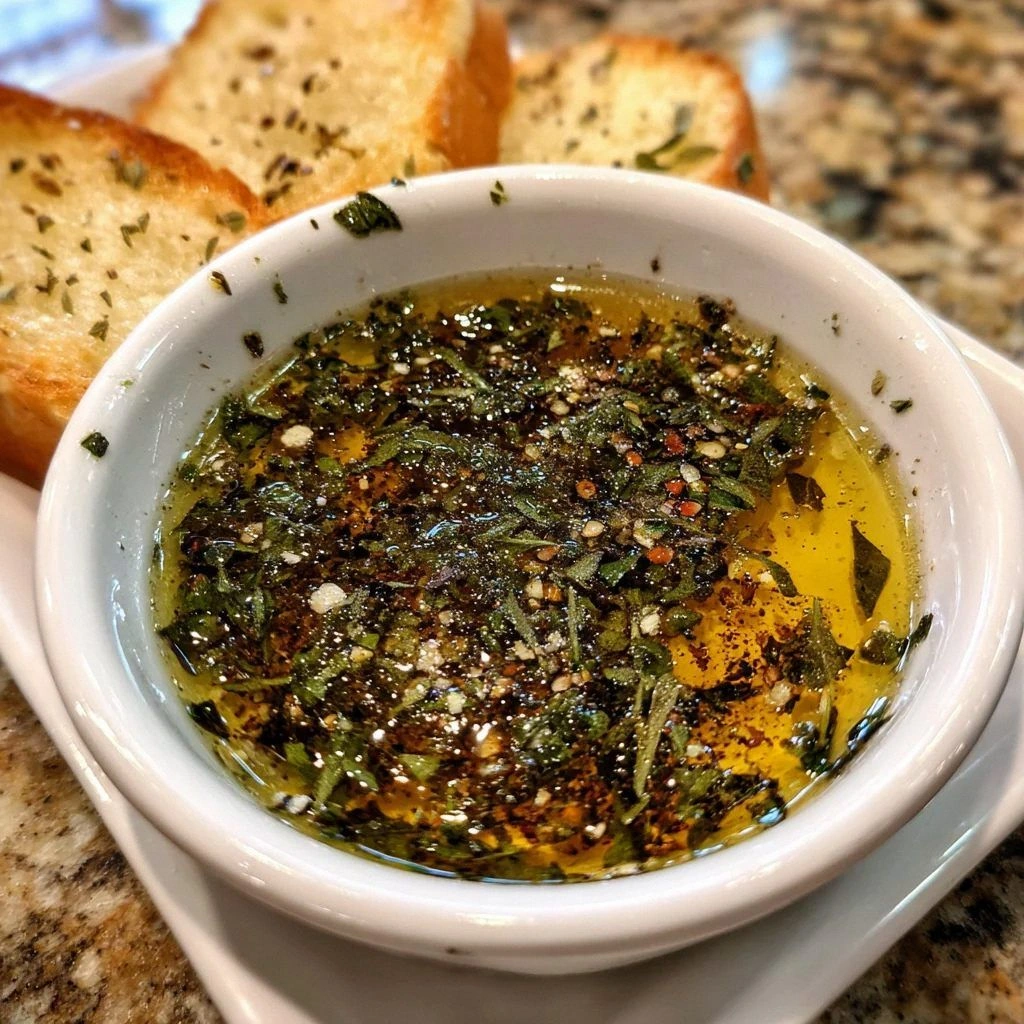
The Method — Step by Step
- Grab a small, heavy-bottomed saucepan and pour in one cup of your best extra virgin olive oil. Set the burner to the lowest heat possible; you're aiming for about 110°F, which feels barely warm when you dip a finger. If the oil starts to shimmer or ripple, you've overshot and need to pull it off the heat for a minute. The goal is to coax the herbs open, not fry them into bitterness. Okay, now watch this part closely.
- While the oil warms, measure out one teaspoon each of dried basil, oregano, and thyme, plus half a teaspoon of crushed rosemary. Whisk them together in a ramekin so they're ready for their hot-tub moment. This blend is what Carrabba's uses, but feel free to adjust—I'll be honest, I ate half the batch before anyone else got to try it because I kept "taste-testing" the ratios. Keep the garlic powder, onion powder, salt, and pepper within arm's reach; timing matters in the next step.
- When the oil is just warm enough that holding your finger in it for three seconds doesn't burn, sprinkle in the herb mixture while stirring with a small silicone spatula. You should see tiny bubbles clinging to the herbs—that's the water in the plants escaping, not the oil boiling. If you hear sizzling, lower the heat immediately. Let the herbs dance around for two full minutes; this blooming phase unlocks essential oils and turns your kitchen into an Italian hillside. That aroma wafting up? Absolute perfection.
- Slide the pan off the heat and whisk in half a teaspoon of garlic powder, a quarter teaspoon of onion powder, a pinch of kosher salt, and five grinds of fresh black pepper. The residual warmth will bloom these aromatics without scorching them. Don't walk away from the stove here; garlic powder can go from sweet to acrid in the blink of an eye. Stir for thirty seconds until the powders dissolve and the oil turns a deep golden-green. This next part? Pure magic.
- Add red-pepper flakes to taste—start with an eighth of a teaspoon if you're spice-cautious, or go up to half a teaspoon if you want that gentle back-of-throat burn. Stir again and let the mixture steep for five minutes off the heat. During this mini-vacation, the flavors meld and the color intensifies. If you own a probe thermometer, the oil should register below 100°F by now; any hotter and you'll risk bitter notes when we add the final touches.
- Strain the oil through a fine-mesh sieve into a heat-proof bowl if you want restaurant-smooth clarity, or pour it straight into your serving dish for that rustic speckled look. I keep the herbs in because I love catching tiny flecks on my bread, but strained oil stores longer and looks more refined. Either way, let the oil cool to room temperature before the final seasoning check; flavors mute slightly when hot, so this prevents over-salting. Now the fun part.
- Taste—yes, just dunk a cube of bread and swirl. Need more salt? Add two more pinches and stir. Want brighter top notes? Stir in a teaspoon of good balsamic vinegar or a shower of grated Parmesan. These extras deepen complexity but aren't mandatory; the base oil is already crave-worthy. Once you're happy, funnel it into a glass bottle with a tight lid, or serve immediately in a shallow plate alongside a warm baguette. Future pacing: picture yourself pulling this out of the oven, the whole kitchen smelling incredible, friends hovering like seagulls.
- Let the oil rest at least twenty minutes before serving if you can stand the wait. This brief nap allows the flavors to settle and marry, turning the blend from "delicious" to "I need this in IV form." If you're prepping ahead, refrigerate for up to one month; bring back to room temp before serving so the olive oil loosens up and the aromatics re-awaken. And now the fun part: tear, swipe, munch, repeat until the loaf is history and you're sopping up the last emerald drops with your finger. No judgment here.
That's it—you did it. But hold on, I've got a few more tricks that'll take this to another level...
Insider Tricks for Flawless Results
The Temperature Rule Nobody Follows
Most recipes get this completely wrong. Here's what actually works: keep the oil under 120°F. Any hotter and the garlic powder scorches, basil turns hay-bitter, and you lose those volatile top notes that make restaurant versions smell so intoxicating. I use an instant-read thermometer like a total nerd, but you can hover your hand over the pan; if it feels like a warm bath, not a sauna, you're gold.
Why Your Nose Knows Best
Smell your dried herbs before committing them to the pot. If the basil smells like dusty tea or the rosemary like old Christmas needles, toss them. Herbs older than a year have lost their mojo and will drag your oil into mediocrity. A friend tried skipping this step once—let's just say it didn't end well, and her party guests politely left most of the dip behind.
The 5-Minute Rest That Changes Everything
After mixing, cover the bowl with a plate and let it sit five minutes. The steam trapped inside rehydrates the herbs just enough to bloom flavor without muddying the oil. This micro-challenge separates good dipping oil from the stuff that makes people close their eyes and sigh. Stay with me here—this is worth it.
Double-Strain for Keeps
If you plan to keep the oil longer than a week, strain it twice through cheesecloth. Tiny herb particles continue leaching bitterness as they sit, so removing them extends shelf life and keeps the flavor bright. Your future self, pulling out a jar two weeks later, will thank you.
Creative Twists and Variations
This recipe is a playground. Here are some of my favorite ways to switch things up:
Sicilian Heatwave
Swap the red-pepper flakes for a teaspoon of Calabrian chili paste and add a pinch of fennel seeds. The licorice note plays beautifully with the garlic and makes the oil taste like a pepperoni pizza in liquid form. Great for those who love bold, punchy flavors.
Lemon-Kissed Riviera
Stir in a teaspoon of finely chopped preserved lemon peel and replace half the basil with dried mint. The result is bright, almost floral, perfect for dipping crusty ciabatta before a seafood dinner. If you've ever struggled with pairing appetizers to fish, I've got the fix.
Smoky Tuscan Nights
Add a quarter teaspoon of smoked paprika and a crushed bay leaf. The smoke mingles with the rosemary and tricks your brain into thinking there's grilled bread involved, even though there isn't. Barbecue fans lose their minds over this version.
Creamy Parm Dream
Whisk two tablespoons of grated Parm into the finished oil while it's still slightly warm. The cheese melts into tiny umami pockets that cling to every crevice of the bread. Kids inhale this like it's liquid gold.
Herb Garden Fresh
Replace dried herbs with double the amount of fresh ones, gently bruised, and let the oil infuse for only 30 minutes off heat. The flavor is lighter, more vegetal, perfect for summer tomatoes or as a finishing drizzle over grilled vegetables.
Autumn Harvest
Add a pinch of ground sage and a teaspoon of maple syrup. The sweet-savory combo tastes like Thanksgiving stuffing in dip form. Sounds weird until you try it—then you can't stop.
Storing and Bringing It Back to Life
Fridge Storage
Pour the cooled oil into a sterilized glass bottle, seal tightly, and refrigerate up to one month. The olive oil will cloud and solidify—totally normal. Set the bottle on the counter 20 minutes before serving and give it a shake to reincorporate the herbs. For best flavor, bring it to room temperature; cold mutes aromatics faster than a librarian shushing teenagers.
Freezer Friendly
Freeze in ice-cube trays for single-use portions that thaw in minutes. Once solid, pop the cubes into a zip-top bag, squeeze out the air, and keep frozen up to four months. Drop a cube into hot pasta for instant aglio e olio, or melt over roasted potatoes. Future pacing: imagine opening the freezer and seeing flavor bombs lined up like green gold nuggets.
Best Reheating Method
There really isn't reheating—just warming to room temp. If you're in a rush, set the bottle in a bowl of warm tap water for five minutes. Never microwave; hot spots can fry the herbs and turn the oil bitter. Add a tiny splash of fresh olive oil to brighten flavors if the mix has dulled after storage.