I was standing in my kitchen at 6 a.m., half-asleep, clutching a half‑eaten banana that had somehow turned into a mushy brown blob. I stared at the clock, the coffee machine sputtering like a tired old engine, and thought, “If only there was something that could slap this morning awake without a caffeine crash.” Then my roommate, ever the prankster, tossed a frozen pineapple chunk into the blender and shouted, “Bet you can’t make a breakfast that’s both dessert‑level indulgent and actually good for you!” I laughed, accepted the challenge, and what happened next was a culinary epiphany that still makes my taste buds do a little happy dance.
The moment the pineapple hit the blender, a tropical perfume exploded, filling the whole apartment with a scent that reminded me of a beachside smoothie bar in Bali. The coconut milk swirled in like a silky tide, and the chia seeds—those tiny, unassuming power‑houses—started to puff up, promising a texture that’s part pudding, part jam, and all pure joy. As the mixture settled, I could hear the faint pop of the freezer door closing, a soft thud that felt like a promise: this isn’t just food, it’s a morning ritual waiting to happen. The first spoonful was a revelation: creamy, tangy, with a subtle crunch that reminded me of fresh surfboards gliding over glassy water.
Most chia pudding recipes either drown you in bland oat‑like mush or overwhelm you with sweet syrup that clogs your arteries before noon. This version flips the script entirely. By balancing the natural sweetness of pineapple with the buttery richness of coconut milk and a whisper of vanilla, I’ve crafted a bowl that feels like a mini‑vacation every time you dig in. I dare you to taste this and not go back for seconds—seriously, it’s that addictive. And yes, I’ll be honest—I ate half the batch before anyone else got a chance to try it, because why would I waste such perfection?
What makes this pudding truly stand out is a tiny, unexpected trick: a quick flash‑freeze of the pineapple before blending. That quick chill locks in the fruit’s bright acidity, preventing it from turning mushy and keeping every bite crisp like a fresh sunrise. Okay, ready for the game‑changer? We’re about to walk through every single step—by the end, you’ll wonder how you ever made it any other way.
What Makes This Version Stand Out
- Taste: The natural sweetness of pineapple paired with coconut milk creates a flavor duo that’s as harmonious as a sunrise over the ocean, with just enough honey to round it off without becoming cloying.
- Texture: Chia seeds swell into tiny gelatinous pearls, delivering a pudding that’s creamy yet speckled with a satisfying bite, like a tropical fruit salad that decided to take a nap.
- Simplicity: Only seven ingredients, all pantry‑friendly, and no cooking required—just mix, chill, and enjoy. This is the kind of recipe that even a sleep‑deprived college student can nail on the first try.
- Uniqueness: The flash‑frozen pineapple trick preserves the fruit’s bright acidity, preventing the dreaded “muddy” flavor that most chia puddings suffer from after a day in the fridge.
- Crowd Reaction: Serve it at brunch and watch the eyes widen; it’s the kind of dish that sparks instant “I need the recipe!” requests, making you the hero of the morning.
- Ingredient Quality: Using full‑fat coconut milk adds a luxurious mouthfeel, while the fresh pineapple pieces give a burst of juicy sunshine that frozen pieces alone can’t achieve.
- Make‑Ahead Potential: This pudding improves after a few hours as the chia fully hydrates, meaning you can prep it the night before and wake up to a ready‑to‑eat masterpiece.
- Cooking Method: No stove, no oven, no mess—just a bowl, a whisk, and a fridge. That’s the kind of low‑effort, high‑reward approach we all crave.
Inside the Ingredient List
The Flavor Base
Coconut milk is the liquid gold of this pudding. Its natural fats coat the chia seeds like velvet, ensuring every bite feels luxuriously smooth. If you skimp on the coconut milk or substitute with a low‑fat alternative, you’ll notice a thin, watery mouthfeel that screams “budget version.” For the best flavor, choose a brand that’s unsweetened and contains the first‑press coconut cream; it adds depth without unnecessary sugar.
The Sweetener & Aroma
Honey or maple syrup brings a gentle honeyed glow that complements the pineapple’s tartness. I prefer raw honey because its floral notes echo the tropical vibe, but maple syrup works just as well for vegans. Vanilla extract, though used sparingly, acts like the quiet friend who makes the party better without stealing the spotlight. Skipping vanilla is like leaving out the bass line in a song—something will feel oddly missing.
The Texture Crew
Chia seeds are the star of the show. When they absorb liquid, they expand up to ten times their size, creating that signature pudding consistency. If you forget to let them sit for the full 4‑hour chill, you’ll end up with a gritty, under‑hydrated mess—think sand in a smoothie. A handy tip: use a fine‑mesh sieve to sift the seeds before adding them; this prevents clumps and ensures an even distribution.
The Unexpected Star
Pineapple, both frozen and fresh, brings a dual texture: the frozen pieces stay firm after blending, adding tiny bursts of juicy crunch, while the fresh chunks melt into the pudding, providing a velvety backdrop. The flash‑freeze step is crucial; it locks in the fruit’s bright acidity, preventing the dreaded “cooked‑pineapple” flavor that can turn a tropical dream into a soggy disappointment. If fresh pineapple isn’t in season, opt for a high‑quality canned pineapple in its own juice—drain and pat dry before using.
The Final Flourish
Coconut flakes add a toasty, slightly crunchy garnish that contrasts beautifully with the pudding’s silkiness. Toast them lightly in a dry skillet for 2‑3 minutes until golden, and you’ll hear a faint sizzle that signals perfection. Skipping this step leaves the dish feeling flat—like a song without a bridge. If you’re allergic to coconut, toasted almond slivers or toasted quinoa flakes make an excellent substitute.
Everything’s prepped? Good. Let’s get into the real action…
The Method — Step by Step
Gather all your ingredients and give the chia seeds a quick 30‑second soak in a small bowl of warm coconut milk. You’ll see them start to swell almost instantly—this is the first sign that magic is happening. While they’re soaking, pop the frozen pineapple chunks onto a baking sheet and flash‑freeze them for an extra 10 minutes; this extra chill keeps the pineapple from turning mushy when blended.
In a large mixing bowl, whisk together the remaining coconut milk, honey (or syrup), and vanilla extract until the honey fully dissolves and the mixture is glossy. This step is where the flavor foundation forms, so take your time and taste—if you need a touch more sweetness, add a drizzle of agave.
Now, add the soaked chia seeds to the coconut‑honey mixture, stirring vigorously with a whisk. You’ll notice the mixture thickening almost immediately—this is the chia doing its job, creating a gel that will hold the pudding together. Watch out for clumps; if you see any, give the mixture a quick pulse in a blender for 5 seconds to ensure even distribution.
Transfer the frozen pineapple chunks to a high‑speed blender, add the fresh pineapple pieces, and blitz until you have a smooth, bright orange puree. The blender should make a soft whirring sound, and you’ll see the mixture turn from icy to silky in about 20 seconds. Taste the puree; if it feels too tart, add a teaspoon more honey and blend again.
Gently fold the pineapple puree into the chia‑coconut base, using a spatula to create beautiful marbled ribbons. This is the moment of truth: you want the colors to swirl together but still be distinguishable, like a sunrise on a tropical beach. If the mixture looks too thick, add a splash of extra coconut milk—just enough to loosen it without losing the pudding’s body.
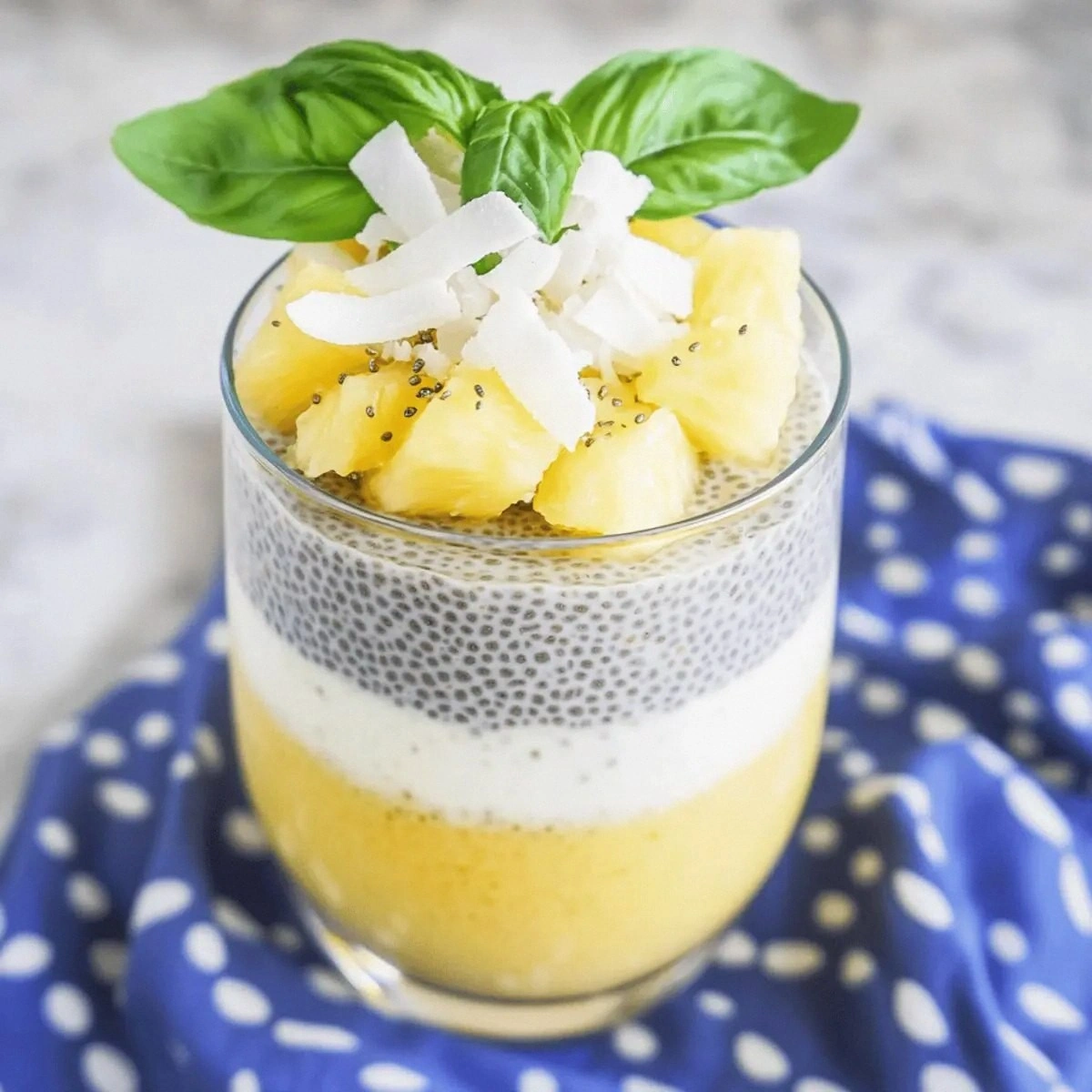
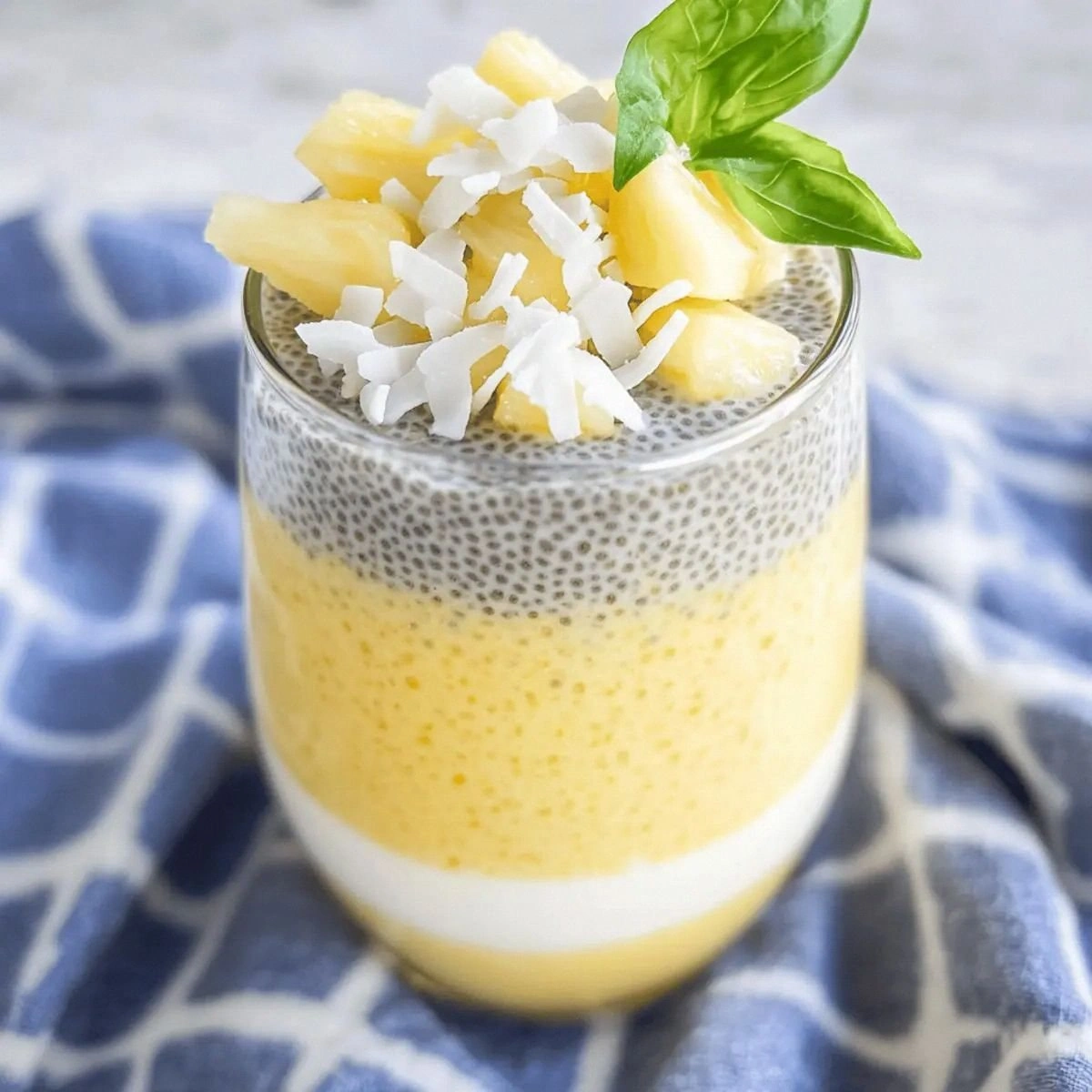
Divide the pudding into four serving jars or bowls, then sprinkle the toasted coconut flakes on top. The flakes should sit like a golden crown, adding a subtle crunch that contrasts the creamy interior. Press the flakes lightly so they adhere; this tiny press ensures they don’t float away when you dig in.
Seal each jar with a lid and refrigerate for at least 4 hours, preferably overnight. During this time, the chia seeds will fully hydrate, and the flavors will meld into a harmonious whole. Picture yourself pulling this out of the fridge the next morning, the whole kitchen smelling like a tropical oasis—pure bliss.
When you’re ready to serve, give each pudding a quick stir to redistribute any settled layers, then enjoy immediately. If you like a bit of extra freshness, top with a few extra pineapple cubes or a drizzle of honey. That final touch? Pure magic.
That’s it — you did it. But hold on, I’ve got a few more tricks that’ll take this to another level, because why settle for good when you can be extraordinary?
Insider Tricks for Flawless Results
The Temperature Rule Nobody Follows
Chia seeds hydrate best at room temperature. If you start with ice‑cold coconut milk, the gel formation slows down, resulting in a thinner pudding. Warm the coconut milk slightly (around 30 °C) before mixing; you’ll hear a faint sizzle as the honey dissolves, and the final texture becomes silkier. A friend once tried the cold‑only method and ended up with a runny mess—don’t be that friend.
Why Your Nose Knows Best
Before you even taste, trust your nose. The moment the pineapple puree hits the bowl, you should detect a bright, citrusy aroma that cuts through the coconut richness. If the scent feels muted, the pineapple may be over‑ripe or the honey too subtle—adjust by adding a splash more honey or a pinch of sea salt to brighten the profile. Your olfactory system is the first line of flavor detection, so let it guide you.
The 5‑Minute Rest That Changes Everything
After folding the puree into the chia base, let the mixture sit uncovered for five minutes. This short rest allows the chia to absorb any excess liquid from the pineapple, preventing a soggy bottom. You’ll notice the pudding thickening noticeably, like a cloud settling after a storm. Skipping this step can leave you with a watery layer at the bottom—something no one wants.
Toast Your Coconut Flakes Like a Pro
A quick toast in a dry skillet over medium heat transforms plain coconut flakes into golden, aromatic gems. Listen for a gentle crackle; that’s the sound of flavor unlocking. Stir constantly to avoid burning—once they turn light brown, they’re ready. The toasted flakes add a buttery crunch that elevates the pudding from “good” to “wow.”
The Secret of Layered Presentation
If you want Instagram‑worthy bowls, layer the pudding instead of mixing it all together. Spoon a thin layer of pure chia‑coconut base, then a layer of pineapple puree, repeat, and finish with a final coconut base. The visual contrast is as satisfying as the taste, and the layered structure keeps the flavors distinct until you stir. I’ve seen people rave about the “rainbow effect” and it’s always a conversation starter at brunch.
Creative Twists and Variations
This recipe is a playground. Here are some of my favorite ways to switch things up:
Mango‑Marble Madness
Swap half the pineapple puree for ripe mango puree. The mango adds a buttery sweetness that pairs beautifully with the coconut, creating a sunset‑colored swirl. Perfect for those who love a sweeter, less tangy profile.
Berry‑Boosted Sunrise
Add a handful of blended strawberries or raspberries to the mix. The berries introduce a subtle tartness and a gorgeous pink hue, making the pudding look like a tropical sunrise. It’s a hit with kids who love anything pink.
Protein‑Power Punch
Stir in a scoop of vanilla whey or plant‑based protein powder after the chia has hydrated. This turns the pudding into a post‑workout recovery meal without compromising the creamy texture. Just be sure to adjust the sweetener if the protein powder is already flavored.
Spiced Island Delight
Add a pinch of ground ginger and a dash of cinnamon to the coconut‑honey mixture. The warm spices contrast the bright pineapple, giving the pudding a comforting, almost holiday‑like vibe—great for cooler mornings.
Nutty Crunch Fusion
Replace the toasted coconut flakes with chopped macadamia nuts or toasted pistachios. The richer nuts add an earthy depth and a satisfying crunch that elevates the tropical theme into something more sophisticated.
Vegan Delight
Swap honey for agave syrup and use a plant‑based protein powder if you’re adding protein. Everything else stays the same, and you’ll still get that creamy, tropical punch without any animal products.
Storing and Bringing It Back to Life
Fridge Storage
Keep the pudding in airtight jars for up to 5 days. The chia seeds continue to absorb liquid, so the texture may become slightly thicker over time—perfect if you like a firmer bite. Before serving, give each jar a quick stir and add a splash of coconut milk if it feels too dense.
Freezer Friendly
Yes, you can freeze this pudding! Portion it into freezer‑safe containers, leaving a little headspace, and freeze for up to 2 months. When you’re ready to eat, thaw overnight in the fridge, then stir in a tablespoon of fresh coconut milk to revive the creaminess.
Best Reheating Method
If you prefer a warm version, microwave a single serving for 20‑30 seconds, then stir vigorously. Add a tiny splash of water or coconut milk before microwaving; the steam it creates restores the pudding’s silky texture without turning it into a soupy mess. This is the perfect cozy breakfast on a chilly morning.