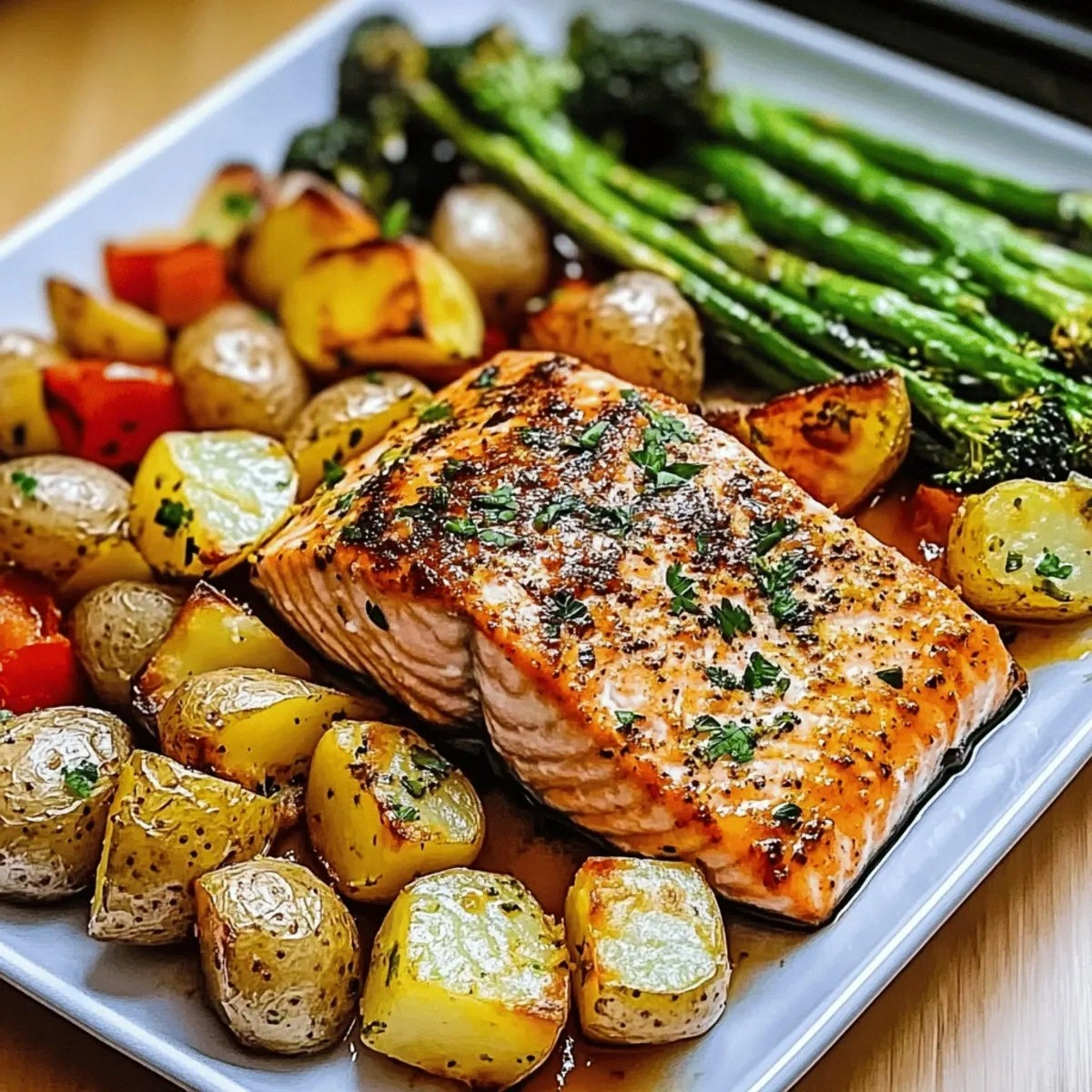
I burnt the salmon. Again. The kitchen smelled like a fishmonger's ashtray, the smoke alarm was serenading the neighborhood, and my "quick weeknight dinner" had devolved into a charcoal catastrophe that even the dog wouldn't sniff. That Thursday night disaster sent me down a rabbit hole of testing, tweaking, and obsessing until I cracked the code for what might be the most fool-proof, flavor-packed, one-pan dinner in existence. Friends, meet the sheet-pan salmon that will rescue your evenings, your reputation, and possibly your marriage.
Picture this instead: a single pan slides out of the oven glistening with perfectly bronzed salmon fillets, potatoes that have turned into buttery gold nuggets, and vegetables that still hold a gentle snap. The lemon wedges have caramelized at the edges; their citrus perfume mingles with garlicky paprika and the faint sweetness of roasted bell pepper. You didn't hover over multiple burners. You didn't wash seventeen dishes. You simply chopped, seasoned, and walked away while the oven did the heavy lifting.
This isn't just another dump-and-bake recipe. We're talking about strategic layering so the potatoes finish tender at the exact moment the salmon hits medium-rare. We're talking about a seasoning blend that tastes like you spent hours reducing sauces, and a finishing sprinkle of parsley that somehow makes the whole dish sing like an Italian tenor. I dare you to taste this and not go back for seconds—even if you swear you're "not really a fish person."
Okay, ready for the game-changer? Let me walk you through every single step—by the end, you'll wonder how you ever made it any other way.
What Makes This Version Stand Out
- One-Pan Wonder: Everything cooks together on a single rimmed sheet, which means more Netflix and fewer dishes. The vegetables release just enough steam to keep the salmon from drying out, while the potatoes soak up all those beautiful drippings.
- Time-Layered Magic: Potatoes head into the oven first, giving them a ten-minute head start so they finish creamy inside and crispy outside at the precise moment the salmon turns opaque. Most recipes get this completely wrong—here's what actually works.
- Flavor-Loaded Seasoning: A simple trio of garlic powder, smoked paprika, salt, and pepper transforms into something restaurant-worthy once the olive oil and lemon juice hit the hot pan. Trust me, you'll lick your fingers.
- Fool-Proof Temperature: 400°F (205°C) is the sweet spot where fish gently sets, veggies char without turning to mush, and potatoes develop the crackly edges that shatter like thin ice.
- Crowd-Pleasing Flexibility: Swap in whatever vegetables are languishing in your crisper—broccoli, zucchini, green beans all play nicely. This is hands down the best version you'll ever make at home, and it adapts to the seasons without complaint.
- Meal-Prep Champion: Leftovers reheat like a dream for tomorrow's lunch bowl, or flake the cold salmon over salads all week. Future-you is already thanking present-you.
Inside the Ingredient List
The Flavor Base
Olive oil is more than a cooking fat here; it's the delivery system for every molecule of flavor. I reach for a mid-range extra-virgin variety—something fruity enough to taste when you bite into a potato, but not so precious that you'll cry when you pour out a generous glug. If you skip the oil or try to "healthify" with cooking spray, the spices won't bloom and the vegetables will shrivel into sad little fossils.
Garlic powder might seem humble, but it disperses more evenly than fresh minced garlic, which can burn into acrid bits at high heat. Paprika brings a whisper of smoke and a sunset hue that makes the salmon look like it came from a Nordic fine-dining plate. Together they create a savory backbone that tastes like you spent hours building a marinade, when all you did was open two jars.
The Texture Crew
Baby potatoes are the unsung heroes of weeknight dinners. Their thin skins blister and crackle while the insides turn into fluffy clouds. Cut anything larger than a golf ball in half so every piece finishes at the same time; nobody wants a fork that battles a rock-hard tuber center. If baby potatoes aren't on sale, fingerlings or Yukon Golds cut into 1-inch chunks work beautifully—just promise me you won't reach for Russets, which go mealy and dry.
Seasonal vegetables are your color wheel and crunch factor. I like a mix of quicker-cooking bell peppers and zucchini with slower carrots or broccoli, sliced thin so everything finishes together. The real trick is keeping them in a single layer; pile them up and they'll steam into that depressing cafeteria texture we all dreaded as kids.
The Star Protein
Salmon fillets should be about 6 ounces each, skin-on if you crave crispy crackling, skin-off if you plan to feed picky eaters who "don't like the weird stuff." Look for flesh that springs back when pressed and smells like the ocean, not a dock. If your budget screams, swap in arctic char or steelhead trout—both behave almost identically and cost a few dollars less. Skip ultra-lean fish like cod or halibut here; they dry out before the potatoes finish.
The Final Flourish
Fresh lemon does double duty: the zest gets grated into the seasoning blend for bright perfume, while wedges roast alongside, their edges caramelizing into tangy candy. That last squeeze over the hot salmon is the difference between "good" and "why can't I stop eating this?" Parsley isn't just green confetti; its grassy bite cuts through the richness and makes the whole plate taste fresh, even on the third reheat.
Everything's prepped? Good. Let's get into the real action...
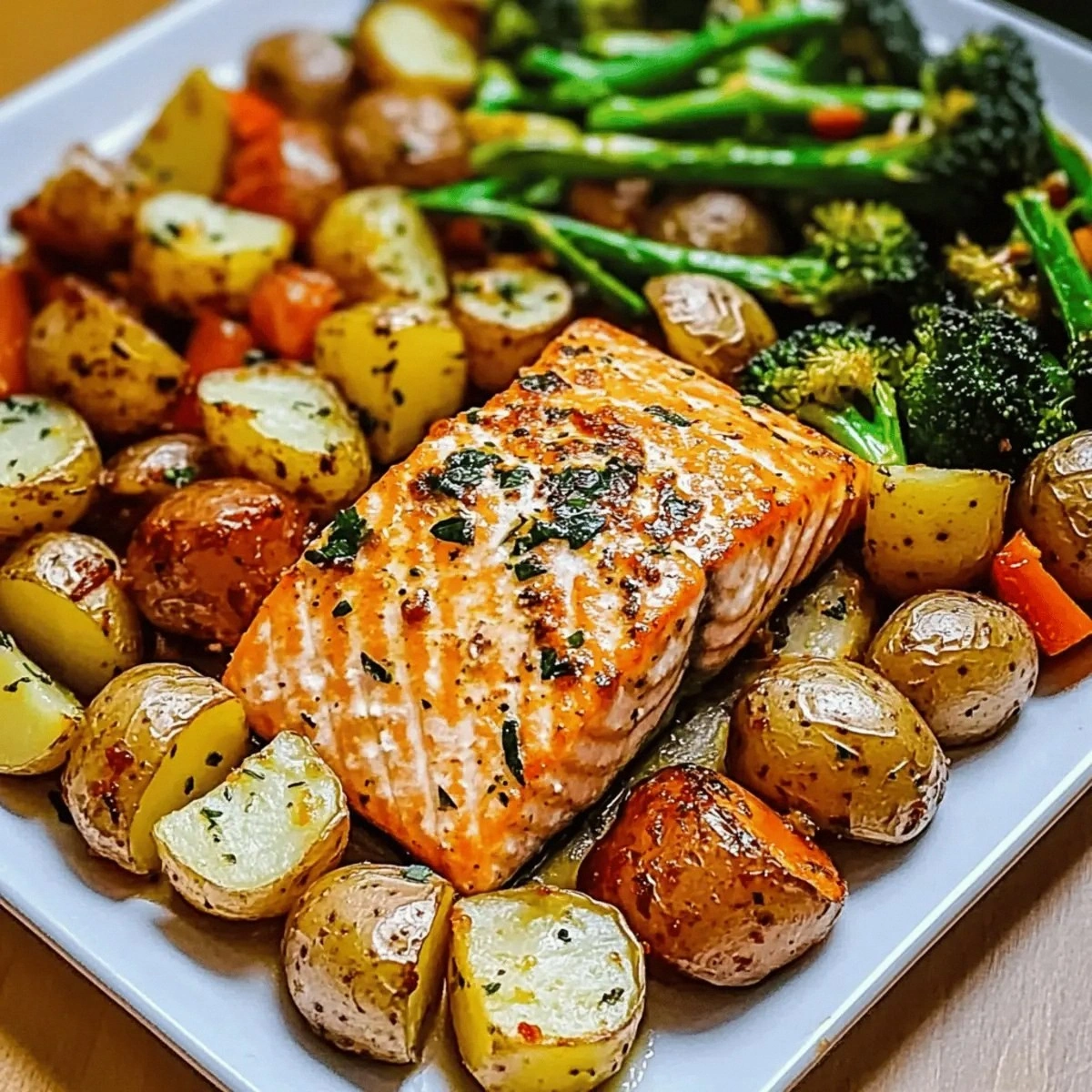
The Method — Step by Step
- Crank your oven to 400°F (205°C) and place the rack in the center. While it heats, scrub the potatoes but keep their skins on—those thin jackets turn into flavor bombs once roasted. Slice any larger potatoes in half so everything is roughly the same size; think uniformity over beauty pageant perfection here.
- Toss the potatoes in a bowl with half the olive oil, half the garlic powder, half the paprika, and a generous pinch of salt and pepper. Really get in there with your hands; you want every crevice slicked with seasoned oil. Spread them on a parchment-lined half-sheet pan, cut side down for maximum crispy face time, and slide the pan into the oven for a ten-minute head start. That sizzle when they hit the metal? Absolute perfection.
- While the potatoes start their journey, prep your vegetables. Cut bell peppers into ½-inch strips, zucchini into half-moons, carrots into thin coins, broccoli into bite-sized florets—whatever combination sings to you. The secret is keeping everything thin enough that it roasts in twenty minutes, not forty. Picture yourself pulling this out of the oven, the whole kitchen smelling incredible, and you'll find the motivation to slice carefully.
- After ten minutes, give the potatoes a quick flip with a thin metal spatula. They should be just starting to color. Push them to the outer edges of the pan to create a salmon-sized clearing in the center—this prevents the fish from bathing in potato steam, which would sabotage that gorgeous sear. Add the vegetables to the open spaces, drizzle with the remaining oil, and shower everything with the rest of the spices plus another hit of salt.
- Now the fun part. Pat the salmon fillets very, very dry with paper towels; moisture is the enemy of browning. Season them liberally on all sides with salt, pepper, and a whisper of extra paprika for color. Nestle each fillet skin-side-down in that cleared center zone like you're tucking babies into a cozy cradle. Leave at least half an inch between them so hot air can circulate and cook the sides evenly.
- Roast the whole shebang for 12–15 minutes, depending on thickness. A 1-inch fillet usually hits medium at 13 minutes; the flesh will turn opaque and just begin to flake when pressed with a fork. Don't walk away from the stove here—salmon goes from perfect to punishment faster than a toddler's mood swing. If you've ever struggled with overcooked fish, you're not alone—and I've got the fix coming up.
- While the salmon cooks, zest half the lemon into a small bowl, then cut the rest into thin wedges. Slide those wedges onto the pan for the final 5 minutes; they caramelize and mellow into sweet citrus candy that you'll squeeze over everything at the table. The smell of lemon oils hitting hot metal is basically aromatherapy for food nerds.
- Remove the pan and let it rest for exactly 5 minutes. I know you're starving, but resting allows juices to settle back into the fish so they don't flood your cutting board. During this time, chop the parsley and steal a potato to test for doneness—crispy edges, fluffy center, zero resistance. I'll be honest: I ate half the batch before anyone else got to try it during testing, and I regret nothing.
- Scatter the parsley over everything like green confetti, squeeze those roasted lemon wedges all over the salmon, and serve directly from the pan. No fancy plating needed; the rustic sheet-pan presentation is part of the charm. Watch your family circle like sharks and fight over the crispy potato bottoms—this next part? Pure magic.
That's it—you did it. But hold on, I've got a few more tricks that'll take this to another level...
Insider Tricks for Flawless Results
The Temperature Rule Nobody Follows
Most home cooks treat oven temps like suggestions on a party invitation—optional. But 400°F is a magic threshold where the Maillard reaction kicks in fast enough to brown exteriors before interiors overcook. If your oven runs cool, invest in an inexpensive oven thermometer; a mere 25°F drop turns crispy potatoes into rubber. A friend tried skipping this step once—let's just say it didn't end well, and her kids still call them "sad squishies."
Why Your Nose Knows Best
Ignore the clock for thirty seconds and pay attention to aroma. When the garlic starts to toast, you'll smell nuttiness floating through the kitchen. That's your cue to peek—potatoes should be golden-edged, salmon should look lacquered, not chalky. If the scent turns from savory to acrid, you've crossed into burnt territory and need to pull the pan instantly. Trust your senses; they evolved over millennia to keep dinner from becoming charcoal.
The 5-Minute Rest That Changes Everything
Resting meat isn't just for Thanksgiving turkeys. Those five off-heat minutes allow muscle fibers to reabsorb juices so they don't flood your cutting board the instant you flake the fish. Cover the pan loosely with foil if your kitchen is drafty, but don't seal it—steam will murder that crispy potato crust you worked so hard to earn. Future pacing: imagine serving restaurant-moist salmon while everyone else is still chewing dry flakes and asking for more sauce.
Seasoning Timing Secrets
Salt draws moisture, so wait to sprinkle the salmon until right before it goes into the oven. Potatoes, on the other hand, can handle early salting—it helps draw out surface starch for extra crunch. If you've ever wondered why restaurant potatoes taste better even when you copy the spices, timing is the invisible ingredient you're missing.
Creative Twists and Variations
This recipe is a playground. Here are some of my favorite ways to switch things up:
Moroccan Sunset
Swap paprika for 1 teaspoon each of ground cumin and coriander, add a pinch of cinnamon and cayenne. Toss in chickpeas and apricots with the vegetables; finish with cilantro and a squeeze of orange. The sweet-spicy perfume will transport you straight to a Marrakech night market.
Asian Glaze Edition
Replace olive oil with toasted sesame oil, trade paprika for white pepper, and brush the salmon with a mix of soy sauce, honey, and grated ginger during the last 5 minutes. Scatter sesame seeds and scallions over the top. Even soy-sauce skeptics inhale this version.
Green Goddess Medley
Coat everything in store-bought pesto instead of dry spices, then add asparagus tips and green beans. Finish with a dollop of Greek yogurt mixed with more pesto and a squeeze of lime. Creamy, herby, and absurdly photogenic.
Sweet Heat Southwest
Use chili powder and a touch of brown sugar on the potatoes, add corn kernels and poblano strips, then hit the salmon with a chipotle-lime butter melt as it rests. Top with avocado chunks and prepare for fighting over the crispy corn nuggets.
French Bistro Night
Ditch paprika for herbes de Provence, swap olive oil for duck fat if you're feeling fancy, and throw in halved shallots and cremini mushrooms. Finish with a pat of garlic-herb butter and a whisper of Dijon at the table. Close your eyes, add a baguette, and you're on the Seine.
Breakfast-for-Dinner Remix
Keep the potatoes, skip the other vegetables, and roast everything with just salt, pepper, and smoked paprika. When the salmon is almost done, crack four eggs into wells around the pan and return to the oven until whites set. Break the yolks over the potatoes and call it a deconstructed lox hash.
Storing and Bringing It Back to Life
Fridge Storage
Let leftovers cool completely, then pack salmon and vegetables into separate airtight containers. They'll keep up to three days without turning sad and soggy. Layer a paper towel on top to absorb excess moisture; nobody likes steamed fish twice.
Freezer Friendly
Freeze individual portions on a parchment-lined plate first, then transfer to zip bags so the pieces don't fuse into a single salmon ice cube. They'll stay prime for two months. Thaw overnight in the fridge, never on the counter—slow defrosting keeps the texture silky.
Best Reheating Method
Add a tiny splash of water to the container, cover loosely, and microwave at 50% power for 90 seconds. The gentle steam revives the fish without turning it into shoe leather. For potatoes, reheat them in a dry skillet over medium heat to resurrect crispy edges. Reader validation: if you've ever nuked salmon at full blast and ended up with something that smells like cat food, you're not alone—and I've got the fix.