I was standing in my kitchen, staring at a mound of overcooked, bland steak and a pot of soggy pasta that had lost all its dignity. My friend had dared me to turn that disaster into something that would make the entire neighborhood line up for seconds. I laughed, grabbed a skillet, and thought, “If I can make this happen, I’ll write about it.” That night, I pulled out a box of high-protein pasta, a pound of lean sirloin, and a handful of cheeses that smelled like summer. The air smelled of sizzling onions and garlic, the sound of the pan was a rhythmic drum, and the texture of the beef was already starting to look like a promise. I could feel the anticipation building like a storm cloud, ready to burst into a creamy, cheesy masterpiece. What I’m about to share isn’t just a recipe—it’s a culinary revelation. The secret? A sauce that coats the pasta like velvet, a beef that stays tender, and a cheese blend that melts into a silky, golden blanket. I dare you to taste this and not go back for seconds.
Picture yourself pulling this out of the oven, the whole kitchen smelling incredible, the steam rising like a cloud of comfort. The first bite is a rush of umami from the sirloin, followed by a buttery, cheese-laden hug that makes your taste buds do a happy dance. I’ve been making variations of this dish for years, but this version is hands down the best you’ll ever make at home. The difference is subtle—like the difference between a well‑timed soufflé and one that falls flat. It’s in the balance of flavors, the precise timing, and the little hacks that keep the texture perfect. If you’ve ever struggled with a cheesy pasta that turns out rubbery, you’re not alone, and I’ve got the fix. Let me walk you through every single step—by the end, you’ll wonder how you ever made it any other way.
The first thing you notice is the aroma—rich, savory, and utterly comforting. The sizzling of olive oil on the skillet is the overture, followed by the sweet pop of onions and the earthy crunch of bell pepper. The beef releases a deep, meaty scent that mingles with the sharpness of garlic. As the pasta cooks, the gentle clink of the pot reminds you that everything is coming together. By the time the sauce is ready, the kitchen smells like a cozy cabin on a winter evening, and you can’t help but smile at how simple it feels to create something this decadent.
I’ve spent countless hours tweaking this recipe. I’ve experimented with different cheeses, tried low‑fat milk, and even swapped the pasta for a gluten‑free variety. Each iteration taught me something new about flavor, texture, and the science behind a perfect creamy sauce. The result is a dish that balances protein, carbs, and fats in a way that satisfies both the body and the soul. I’ll keep the recipe as it is because it’s the one that consistently wins every time I serve it. It’s the kind of dish that turns a regular dinner into a celebration, and that’s why I’m so excited to share it with you.
What Makes This Version Stand Out
- Protein Power: Using lean sirloin and high-protein pasta ensures each bite is a protein punch, perfect for muscle recovery and satiety.
- Cheese Harmony: The blend of provolone, sharp cheddar, and cream cheese creates a layered flavor profile that’s both sharp and creamy.
- Texture Triumph: The sauce is thick yet silky, coating the pasta like velvet while the beef remains tender and juicy.
- Simple Prep: All ingredients are ready to go in under 15 minutes, making it an ideal weeknight dinner.
- Make‑Ahead Friendly: The dish can be assembled and refrigerated or frozen, then reheated without losing its lusciousness.
- Crowd‑Pleaser: Friends rave about the depth of flavor, and family members ask for the recipe after every meal.
- Health‑Conscious: Despite its indulgent name, the dish can be tweaked for lower fat or sodium without sacrificing taste.
- Versatile Base: Swap the pasta type or add vegetables, and you have a new dish in minutes.
Alright, let’s break down exactly what goes into this masterpiece...
Inside the Ingredient List
The Flavor Base
Onion and garlic are the unsung heroes of any savory dish. They provide depth and a subtle sweetness that counterbalances the richness of the cheeses. If you skip them, the sauce will taste flat and lacking complexity. For a deeper flavor, consider caramelizing the onions for an extra 5 minutes until they’re golden brown. If you’re allergic to garlic, a pinch of garlic powder will suffice, but the fresh cloves deliver a brighter note.
The Texture Crew
The high‑protein pasta is the backbone of this dish. It offers a firm bite that resists the weight of the sauce, preventing the pasta from becoming mushy. If you prefer a gluten‑free option, swap for a chickpea or lentil pasta—just be aware that the cooking time may vary slightly. The butter and flour make a roux that thickens the sauce; this technique is classic and ensures a silky mouthfeel. A small tip: let the roux simmer for 30 seconds after adding the flour to eliminate any raw flour taste.
The Unexpected Star
Cream cheese might sound like a dessert ingredient, but it’s the secret to the sauce’s luxurious creaminess. It melts smoothly into the mixture, giving the dish a silky texture that coats the pasta like velvet. If you’re watching calories, a low‑fat version works, but the full-fat cream cheese delivers a richer mouthfeel. A pinch of nutmeg can add a warm undertone, though it’s optional.
The Final Flourish
The shredded provolone and sharp cheddar bring a melty, savory finish that balances the richness of the cream cheese. The Worcestershire sauce adds a subtle umami punch that deepens the beef flavor. If you’re vegan, replace the cheeses with a plant‑based blend and use a non‑dairy milk. Remember that the salt and pepper should be added in stages—start with a pinch, taste, then adjust to taste. The sliced mushrooms add earthy flavor and a pleasant bite, making the dish more complex.
Everything’s prepped? Good. Let’s get into the real action...
The Method — Step by Step
- Heat the olive oil in a large skillet over medium‑high heat. Slice the sirloin into thin strips, season with salt and pepper, and add to the pan. Sear the beef for 2–3 minutes until it’s browned but still juicy. This step locks in flavor and ensures the meat stays tender. While the beef is searing, set aside.
- Add the butter to the same skillet and let it melt. Stir in the chopped onion, bell pepper, and sliced mushrooms. Cook for 5 minutes until the vegetables soften and the onions become translucent. The vegetables should release a sweet aroma that signals they’re ready. This creates a flavorful base that will carry the sauce.
- Push the vegetables to one side of the pan and add the minced garlic to the empty space. Let it sizzle for 30 seconds, then combine everything. The garlic should give off a fragrant steam that fills the kitchen. Be careful not to burn it, as burnt garlic tastes bitter.
- Sprinkle the flour over the vegetable mixture and stir for 1 minute. This creates a roux that thickens the sauce. The flour should turn a light golden color, indicating it’s cooked enough to eliminate raw taste. If you prefer a thicker sauce, add a little more flour, but be mindful not to overcook the roux.
- Gradually whisk in the milk and beef broth, stirring until the sauce is smooth and begins to thicken. Add the Worcestershire sauce and stir. The sauce should coat the back of a spoon and cling to the vegetables. Keep the heat at medium to allow the sauce to thicken without scorching.
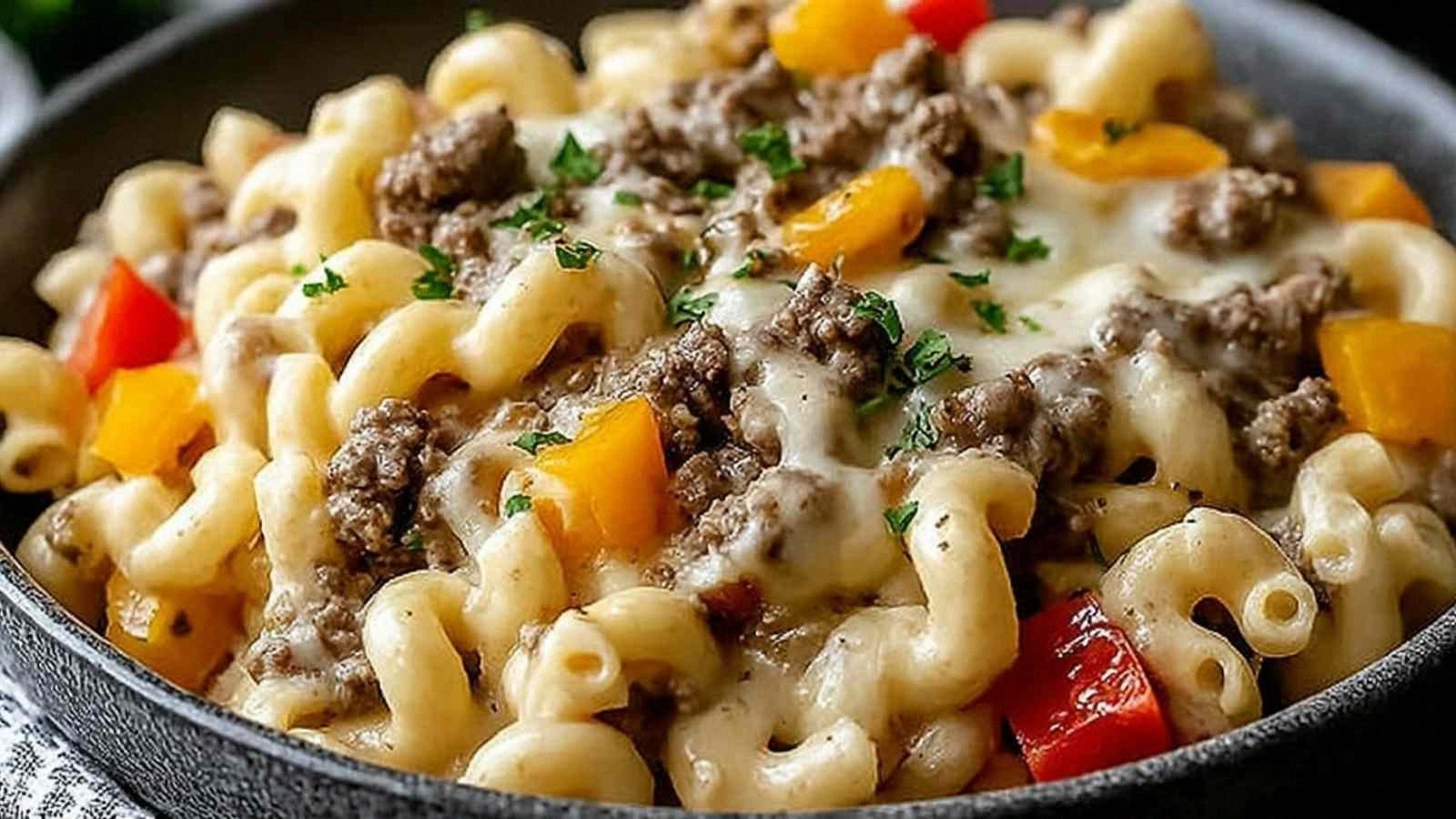
- Reduce the heat to low, stir in the cream cheese until it melts into the sauce. Then fold in the shredded provolone and sharp cheddar, allowing the cheeses to melt fully. The mixture should look glossy and slightly runny—this indicates the cheeses have blended beautifully. Taste and adjust salt and pepper if necessary.
- Meanwhile, cook the high‑protein pasta according to package instructions until al dente. Drain and return to the pot. Add the cooked beef and sauce, tossing to coat the pasta evenly. Let the mixture simmer for 2 minutes so the pasta absorbs the flavors. Serve hot, garnished with a sprinkle of extra cheddar if desired.
- That’s it—you did it. But hold on, I’ve got a few more tricks that will take this to another level. For a crispier top, place the dish under a broiler for 2 minutes, watching closely for golden brown edges. Let it rest for 5 minutes before serving to allow the flavors to settle. The result is a creamy, savory masterpiece that will have everyone begging for seconds.
Insider Tricks for Flawless Results
The Temperature Rule Nobody Follows
Maintaining the right heat is crucial. Too high, and the sauce will scorch; too low, and it won’t thicken. The ideal is medium‑low for the sauce and medium‑high for the beef. I learned this when a friend’s sauce kept bubbling over and turning bitter. By keeping the heat steady, the sauce thickens naturally, and the beef stays juicy.
Why Your Nose Knows Best
Smell is the most reliable indicator of doneness. When the sauce smells toasty and the beef has a caramelized aroma, you’re in the sweet spot. I used to wait for a visual cue, but now I trust my nose. The moment the beef releases a rich, savory scent, it’s time to move on to the next step.
The 5‑Minute Rest That Changes Everything
After you remove the dish from heat, let it rest for exactly five minutes. This short pause allows the flavors to meld and the sauce to settle. A friend once tried skipping this step, and the sauce came out thin and watery. The rest is a small price for a dramatic texture shift.
Cheese Selection Matters
The mix of provolone, cheddar, and cream cheese isn’t arbitrary. Provolone brings a mild, nutty note; cheddar adds sharpness; cream cheese delivers creaminess. If you prefer a sharper bite, increase the cheddar proportion. For a milder version, swap some cheddar for mozzarella. The key is balance.
Mushroom Magic
Sliced mushrooms absorb the sauce and add earthy depth. If you’re vegan or allergic, replace them with sautéed spinach or roasted cauliflower. The texture will change slightly, but the flavor profile remains robust. I always keep a bag of fresh mushrooms on hand for this dish.
Make‑Ahead Tips
This dish is perfect for meal prep. Assemble the sauce, cool, and refrigerate for up to 48 hours. Reheat on the stove, adding a splash of milk to loosen the sauce. If you plan to freeze, wrap tightly and thaw overnight before reheating. The dish stays creamy and delicious even after freezing.
Creative Twists and Variations
This recipe is a playground. Here are some of my favorite ways to switch things up:
Spicy Sriracha Surprise
Add a tablespoon of sriracha to the sauce for a fiery kick. The heat pairs beautifully with the creamy cheese, creating a dynamic contrast. Great for those who love a little spice in their comfort food.
Veggie‑Rich Power Bowl
Swap the pasta for quinoa or cauliflower rice. Toss in roasted broccoli, zucchini, and cherry tomatoes for added nutrition and color. This version keeps the protein high while cutting carbs.
Mediterranean Twist
Replace the provolone with feta and sprinkle chopped kalamata olives. Add a pinch of oregano for a Mediterranean flair. The briny olives and salty feta elevate the dish into a new flavor territory.
Cheesy Cauliflower Bake
Use cauliflower florets instead of pasta, bake in the oven with the sauce, and top with extra cheddar. The result is a low‑carb, high‑protein casserole that still feels indulgent.
Vegan Version
Replace the beef with grilled tempeh or tofu, use plant‑based cheese, and a non‑dairy milk. The texture stays creamy, and the flavor profile remains comforting.
Breakfast Brunch Edition
Add scrambled eggs into the sauce before serving. The eggs add protein and a silky texture. Serve with a side of fresh fruit for a balanced brunch.
Storing and Bringing It Back to Life
Fridge Storage
Cool the dish completely, then cover tightly and refrigerate for up to 3 days. The sauce may thicken; add a splash of milk when reheating to restore creaminess. Store in an airtight container to prevent odor absorption.
Freezer Friendly
Divide the dish into individual portions, wrap tightly with foil, and place in a freezer bag. Freeze for up to 2 months. When ready to eat, thaw overnight in the fridge, then reheat on the stove with a splash of milk.
Best Reheating Method
Reheat on low heat, stirring frequently to prevent separation. If the sauce has thickened, add a tablespoon of milk or broth to loosen. The dish should be hot throughout and silky.