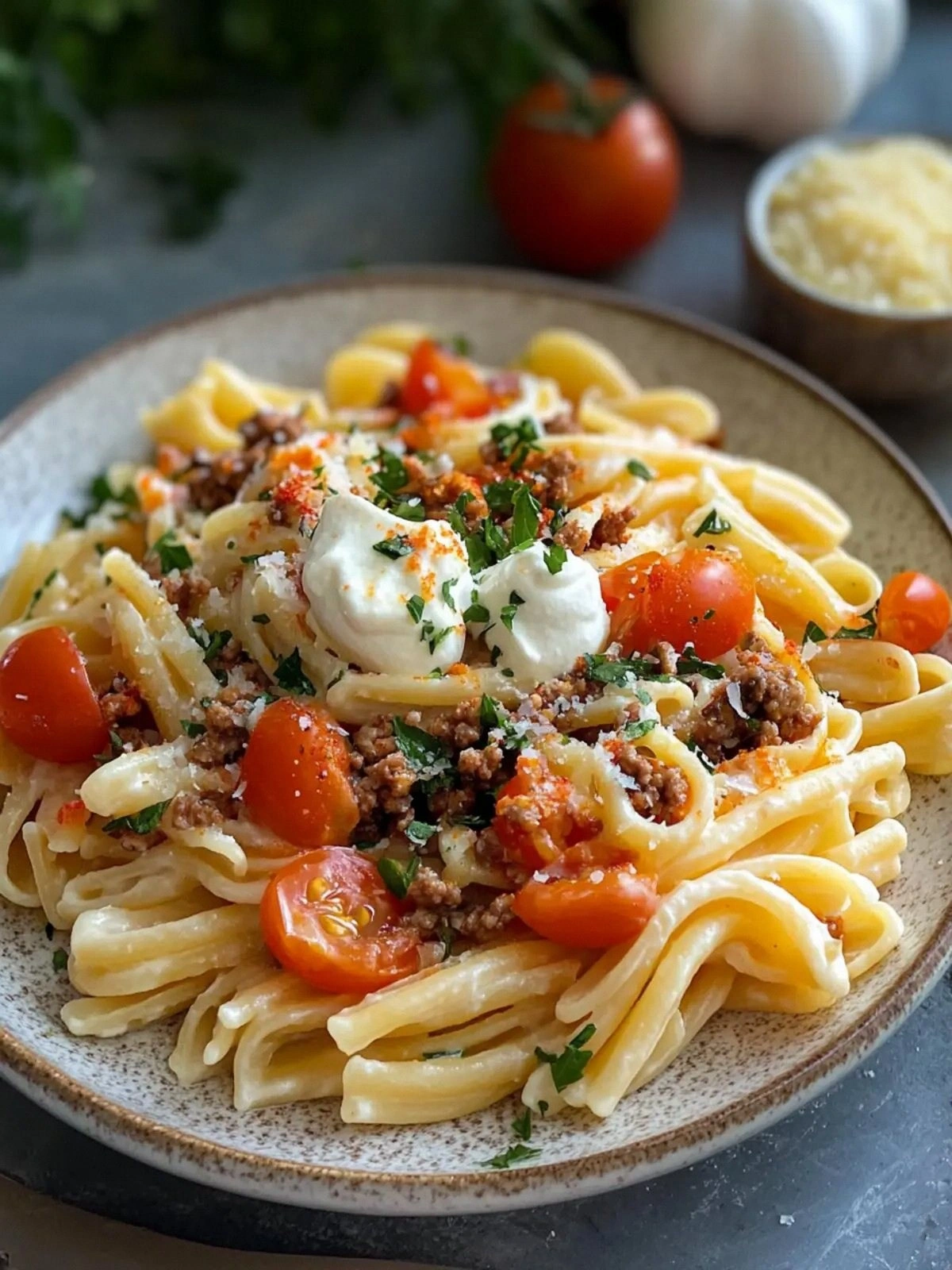
Picture this: it’s a rainy Saturday night, the kitchen lights flicker like distant stars, and you’re standing in front of an empty fridge, feeling the weight of culinary boredom. I was staring at a bag of stale pasta, a can of tomato sauce, and a half‑empty bowl of Greek yogurt, wondering if I could turn that sad, soggy combo into something that would make my taste buds dance. Then a friend texted, “I dare you to make a creamy Turkish pasta that’s both comforting and bold.” I laughed, grabbed my apron, and decided to take on the challenge. The result? A sauce that coats the pasta like velvet, a crunch of cherry tomatoes that pops like a tiny burst of sunshine, and a finish that feels like a warm hug in a bowl.
The first bite was a revelation: the tang of Greek yogurt mingled with the smoky heat of cumin, the sweetness of paprika, and the savory depth of ground beef. The sauce thickened into a silky, creamy base that clung to every curl of fusilli, while the feta added a briny contrast that cut through the richness. The aroma was unmistakably Turkish, with hints of citrus and earth that made the whole kitchen smell like a Mediterranean market. The texture was a play of smoothness and bite—each spoonful was a layered experience. I swear, that sizzle when the beef hit the pan? Absolute perfection. It was so good, I almost forgot I’d been craving something simple.
What makes this version stand out is that it’s not just another pasta recipe; it’s a culinary revelation that takes a familiar comfort food and turns it into a showstopper. I’ve experimented with dozens of sauces, but none of them have delivered the same balance of creamy richness, aromatic spices, and bright acidity that this dish offers. The secret lies in the precise layering of flavors, the use of Greek yogurt as a stabilizing agent, and the bold, unapologetic seasoning. I’ll be honest— I ate half the batch before anyone else got to try it. I dare you to taste this and not go back for seconds.
Most recipes get this completely wrong by overcooking the pasta or under-seasoning the beef. Here’s what actually works: cook the pasta al dente, sear the beef until it’s caramelized, and fold in yogurt at the end to keep it from curdling. The result is a sauce that’s silky, not watery, and a pasta that’s firm, not mushy. Picture yourself pulling this out of the oven, the whole kitchen smelling incredible, and the family gathering around the table, eyes wide, ready to dig in. And if you’re wondering whether you can tweak it for a vegetarian version, you’re in the right place. Stay with me here — this is worth it.
What Makes This Version Stand Out
- Flavor: The combination of Greek yogurt, cumin, and paprika creates a depth that is both exotic and comforting, making every bite feel like a passport to Turkey without the airfare.
- Texture: The sauce’s silky consistency coats the pasta like velvet, while the cherry tomatoes add a burst of juiciness that cuts through the richness.
- Ease: From start to finish, the method takes less than an hour, making it a perfect weeknight dinner that doesn’t feel rushed.
- Ingredient Quality: Using fresh, high‑quality feta and real butter elevates the dish, turning simple pantry staples into a gourmet experience.
- Versatility: The recipe can be swapped for gluten‑free pasta or a plant‑based protein, making it inclusive for most diets.
- Crowd Appeal: Even the pickiest eaters will love the creamy texture and bold spices, making it a hit at family gatherings.
- Make‑ahead Potential: The sauce can be stored in the fridge for up to three days, and the pasta can be reheated with a splash of water to restore its silky texture.
- Presentation: The bright green parsley and the golden flecks of feta make the dish look as good as it tastes, turning a simple plate into a showstopper.
Alright, let's break down exactly what goes into this masterpiece...
Inside the Ingredient List
The Flavor Base
At the heart of this dish is the Greek yogurt, which provides a creamy, tangy foundation that balances the savory beef and the sharp feta. It’s the secret to a silky sauce that doesn’t separate when heated. If you skip it, you’ll end up with a sauce that’s more stew than pasta. For a thicker texture, use whole‑fat yogurt; for a lighter version, opt for low‑fat. The yogurt’s live cultures also help break down the beef’s proteins, resulting in a more tender bite.
The Texture Crew
Ground beef is the star of the show, bringing umami depth and a satisfying chew. Cook it until it's nicely browned, not just pink, to develop that caramelized flavor. The butter adds richness and a glossy sheen to the sauce, while the tomato paste thickens the base and contributes a subtle sweetness. If you’re vegan, substitute the butter with a neutral‑flavored oil and use a plant‑based yogurt. The cherry tomatoes burst with juice, adding a fresh contrast that prevents the dish from feeling too heavy.
The Unexpected Star
Feta cheese may seem like a simple garnish, but it’s the final pop of briny flavor that cuts through the richness. It also adds a slight crumbly texture that contrasts nicely with the smooth sauce. If feta is hard to find, crumbled goat cheese or a salty blue cheese can work as a substitute, though the flavor profile will shift slightly. A pinch of salt to taste can be added at the end to brighten all the flavors.
The Final Flourish
Fresh parsley provides a bright, herbal note that lifts the dish, while the lemon juice adds a citrusy brightness that balances the earthiness of the spices. The parsley’s color also gives the dish a visual pop, making it Instagram‑ready. If you’re short on parsley, a handful of chopped cilantro will add a different but equally refreshing twist. The final touch is the cooked pasta—fusilli or penne are ideal, but any short pasta works.
Everything’s prepped? Good. Let's get into the real action...
The Method — Step by Step
- Bring a large pot of salted water to a boil and cook the pasta until it’s just shy of al dente, about 8 minutes. Drain and set aside, reserving a cup of pasta water. The pasta should still have a firm bite; this will help it absorb the sauce later. Let the pasta cool slightly to prevent the yogurt from curdling when it’s added.
- While the pasta cooks, heat a large skillet over medium‑high heat. Add the ground beef and break it apart with a spatula. Season with salt and pepper. Cook until the beef is browned and juices run clear, about 6 minutes. Drain excess fat if necessary.
- Add the minced garlic and diced onion to the skillet. Sauté until the onion is translucent and the garlic is fragrant, about 2 minutes. The garlic should not burn; keep the heat moderate. This step builds the aromatic foundation of the sauce.
- Stir in the sweet paprika, garlic powder, and cumin. Cook for 30 seconds until the spices release their aroma. This quick burst of heat will elevate the beef’s flavor profile and give the sauce a warm, earthy undertone.
- Add the tomato paste and butter, stirring until the butter melts and the paste coats the meat. Let it simmer for 2 minutes so the tomato paste can caramelize slightly. The butter adds a glossy sheen and balances the acidity of the paste.
- Reduce the heat to low and fold in the Greek yogurt and lemon juice. Stir constantly to prevent the yogurt from curdling. The sauce should be smooth and glossy. This is the moment of truth—don’t let the heat be too high.
- Add the cooked pasta, cherry tomatoes, and feta cheese to the skillet. Toss gently to coat the pasta evenly. If the sauce seems too thick, add a splash of reserved pasta water to reach your desired consistency. The tomatoes should burst with juice, adding a fresh counterpoint.
- Finish with fresh parsley, a sprinkle of salt to taste, and a final drizzle of olive oil if desired. Serve immediately with extra feta on top. The dish is best enjoyed hot, when the flavors are vibrant and the sauce is silky.
That's it — you did it. But hold on, I've got a few more tricks that'll take this to another level...
Insider Tricks for Flawless Results
The Temperature Rule Nobody Follows
Keep the skillet at a steady medium‑low heat when adding the yogurt. A quick spike will cause the proteins to tighten and separate. If you notice the sauce starting to look lumpy, immediately turn off the heat and whisk. This simple temperature control ensures a silky, cohesive sauce that clings to every strand of pasta.
Why Your Nose Knows Best
Smell the sauce as you cook. The aroma should shift from sharp garlic to a warm, earthy scent as the spices release their oils. If the smell becomes overly pungent, reduce the spices slightly. Your nose is the best judge of when the flavor balance is perfect.
The 5‑Minute Rest That Changes Everything
After you stir in the yogurt, let the skillet sit off the heat for 5 minutes before serving. This pause allows the flavors to meld and the sauce to thicken without overcooking. The rest also lets the yogurt fully incorporate, preventing a watery finish.
The Secret Ingredient Swap
If you’re craving a smoky twist, add a pinch of smoked paprika in place of sweet paprika. The smoke will linger on the palate, giving the dish a subtle depth that pairs well with the feta’s brine. Just keep the quantity low so it doesn’t overpower the yogurt.
The Quick Cooling Trick
If you’re in a hurry, rinse the cooked pasta under cold water for a few seconds before adding it to the skillet. This stops the pasta from cooking further and helps it absorb the sauce more evenly. The pasta will still retain its al dente bite, which is essential for a satisfying texture.
Creative Twists and Variations
This recipe is a playground. Here are some of my favorite ways to switch things up:
Spicy Sriracha Kick
Add a tablespoon of Sriracha to the sauce for a fiery twist that pairs well with the feta’s saltiness. The heat will contrast the creamy base, making each bite exciting. This version is perfect for those who love a bit of spice.
Mediterranean Veggie Boost
Swap the ground beef for a mix of roasted eggplant, zucchini, and bell pepper. The vegetables add fiber and a smoky flavor, turning the dish into a hearty vegetarian main. Keep the feta on top for that classic briny finish.
Pesto Power
Stir in a couple of spoonfuls of basil pesto just before serving. The pesto adds a fresh, herbal depth that complements the yogurt and spices. This variation is great for a quick lunch when you need something bright and flavorful.
Coconut Curry Twist
Replace the butter with coconut oil and add a teaspoon of curry powder. The coconut milk can be added for extra creaminess. This version transforms the dish into an Asian‑inspired delight, perfect for a cozy evening.
Lemon‑Zest Finish
Add a tablespoon of lemon zest to the sauce for a bright, citrusy punch that lifts the entire dish. The zest’s oils intensify the lemon juice’s acidity, giving the sauce a fresh finish that pairs beautifully with the feta.
Protein Swap
Use ground turkey or chicken instead of beef for a lighter option. The leaner protein still delivers savory depth, and the dish remains creamy and satisfying. This swap is ideal for a lower‑fat dinner.
Storing and Bringing It Back to Life
Fridge Storage
Store the finished dish in an airtight container in the refrigerator for up to 3 days. The sauce will thicken slightly as it chills, so add a splash of milk or water when reheating to restore its silky texture. Keep the pasta separate if possible to prevent it from absorbing too much sauce.
Freezer Friendly
You can freeze the sauce (without the pasta) in a freezer‑safe container for up to 2 months. Reheat on the stovetop, whisking in a bit of water or broth to loosen the sauce. The pasta should be cooked fresh when you reheat the sauce.
Best Reheating Method
Reheat on low heat, stirring constantly, and add a tiny splash of water or broth to keep the sauce from drying out. If the sauce appears thick, whisk in a tablespoon of Greek yogurt or a splash of milk to bring it back to its original consistency. The pasta should be served hot for the best flavor and texture.