I still remember the morning I ruined huevos rancheros for an entire dinner party. Picture this: six hungry friends sprawled across my living room, mariachi playing, coffee steaming, and me proudly presenting a platter of what looked like scrambled eggs wearing a sad tomato hat. The tortillas were floppy, the beans had the texture of wall paste, and the salsa tasted like it had been drained from a tin can. One polite bite in, I watched my best friend's face contort into that universal expression of culinary regret. In that mortifying moment, I vowed to hunt down every abuelita secret, every market-stall trick, and every smoky salsa whisper until I could make huevos rancheros that would sing louder than a rooster on Cinco de Mayo. Fast-forward through three months of daily egg experiments, a mountain of scorched tomatoes, and one minor blender explosion, and I finally cracked the code. What you're about to make isn't just breakfast; it's a sunrise on a plate—yolk rivers cutting through spicy lava, crisp tortillas snapping like autumn leaves, and a chorus of cilantro so fresh it still holds morning dew. I dare you to taste this version and not go back for seconds. Stay with me here—this is worth it.
Most recipes get huevos rancheros completely wrong. They treat it like an open-face breakfast sandwich, slapping a fried egg on a limp tortilla and calling it a day. That's not food; that's breakfast betrayal. Real huevos rancheros is a symphony of textures: the snap of a blistered corn tortilla, the velvet blanket of slow-cooked beans, the bright pop of lime-kissed salsa, and that golden yolk that bursts like liquid sunshine. The magic lives in the layering—each element cooked separately, seasoned aggressively, and assembled while everything's still hissing hot. If you've ever struggled with soggy tortillas, runny salsa, or eggs that taste like nothing, you're not alone—and I've got the fix. This method borrows the best from Jalisco street vendors and Mexico City brunch joints, then streamlines it for a single skillet and a hungry crowd.
Okay, ready for the game-changer? We're going to char the tomatoes, onion, and chiles under the broiler until their skins blister and blacken, then blend them with a handful of toasted pepitas for a salsa that coats the tongue like velvet. The beans simmer with a smashed garlic clove and a glug of beer until they go from canned to can-'t-believe-it. Tortillas get a quick fry in vibrant-orange chili oil that leaves them rigid enough to scoop yet tender enough to bite. And the eggs—oh, the eggs—are basted in that same smoky oil so the whites ripple into lacy edges while the yolks stay molten. Future pacing: picture yourself pulling this out of the oven, the whole kitchen smelling like a Oaxacan marketplace, your family drifting in like cartoon characters following a scent trail. Let me walk you through every single step—by the end, you'll wonder how you ever made it any other way.
What Makes This Version Stand Out
- Smoke First, Salsa Later: Broiling the vegetables until they're kissed by fire gives the sauce a deep, campfire edge you can't fake with bottled liquid smoke. Most recipes skip this and end up tasting like cafeteria ketchup.
- Crispy-Buttery Beans: We mash half the pintos and let them sizzle in oil until the bottom turns into a golden frisbee. The result is a creamy-beany-crispy hybrid that refuses to slide off your tortilla.
- Chili-Oil Eggs: Instead of plain old vegetable oil, we infuse earthy ancho and fruity guajillo into the pan before the eggs go in. The whites bubble up frilly and bronze, tasting like chorizo without the chorizo.
- Two-Minute Tortilla Trick: Dip corn tortillas in the hot chili oil for exactly fifteen seconds per side, then park them on a cooling rack—not paper towels. They stay shatter-crisp for a full twenty minutes, long enough for seconds.
- One-Skillet Show: Everything happens in the same heavy pan, building flavor like geological layers. Less dishes, more swagger, and a kitchen that smells like you meant business.
- Make-Ahead Magic: The salsa and beans can be prepped up to four days ahead; reheat while the coffee brews. Morning brain fog is no match for a breakfast this organized.
- Avocado Rose Finale: Thin avocado slices curl into a flower that melts on contact with hot yolk. Instagram gold, but also a creamy bridge between tangy salsa and rich egg.
I'll be honest—I ate half the batch before anyone else got to try it. The crispy edges of those beans are addictive little potato-chip impersonators, and I kept "tasting for seasoning" until I realized I'd polished off an entire serving meant for my fiancé. Hide a few tortillas for yourself; you'll thank me later. Alright, let's break down exactly what goes into this masterpiece...
Inside the Ingredient List
The Flavor Base
Plum tomatoes are the workhorses here. Their meaty walls hold up under blistering heat, collapsing into a thick, jammy sauce that clings rather than puddles. Skip the beefsteak supermarket mutants—they're water balloons in disguise and will thin your salsa into tomato soup. If you absolutely must substitute, grab a pound of cherry tomatoes; roast them whole until their skins split and caramelize, then proceed. And here's a confession: I once tried this with canned San Marzanos out of season. The flavor was fine, but the color looked like institutional Salisbury steak. Fresh tomatoes give that bright, lipstick-red pop that makes the dish sing.
White onion brings a sharp, clean heat that mellows into sweetness under the broiler. Yellow onions taste muddy after charring, and red onions turn an unappetizing gray. Cut the onion into thick slabs so the edges blacken while the centers steam into softness. Don't peel off every last charred bit—that black skin is pure umami glitter. A friend tried skipping the onion once; let's just say it didn't end well. The salsa tasted like watered-down ketchup, and she still gets teased at brunch.
The Texture Crew
Pinto beans are the traditional choice for a reason. Their mottled skins stay intact while the insides mash into a creamy cloud, giving you both body and bite. If you only have black beans, go ahead, but know they'll stain everything a gothic purple that looks like Halloween gone wrong. I tested with cannellini beans once—too posh, too mild, like sending a ballet dancer to a street fair. For weeknight speed, canned beans are fine; just rinse off the canning liquid, which tastes like tin and despair. If you're cooking dried beans, add a teaspoon of baking soda to the soaking water; it tenderizes the skins so they surrender in half the time.
Corn tortillas are non-negotiable. Flour tortillas absorb oil like greedy sponges and turn limp within seconds. Look for packages that list only corn, lime, and water—anything else is a preservative-laden impostor. A quick sniff test tells all: they should smell like fresh popcorn, not cardboard. Store extras in the freezer; they thaw in minutes on the countertop and toast up even crispier. And now the fun part: cut them into quarters before frying and you'll have DIY tortilla chips for midnight snacking.
The Unexpected Star
Pepitas (hulled pumpkin seeds) get toasted until they pop like sesame, then ground into the salsa for body and nuttiness. It's a technique I cribbed from a Pueblan market vendor who swore by it, and she was right. The seeds thicken the sauce without dulling the brightness, plus they add a whisper of green-grass flavor that makes the tomatoes taste fruitier. No pepitas? Use slivered almonds, but toast them carefully—they burn faster than gossip spreads at book club. Sunflower seeds work too, though they'll give a slightly earthy note that whispers hippie rather than mariachi.
The Final Flourish
Cotija cheese is the salty snow that melts on contact with hot yolk. Crumble it fine so it disperses like savory confetti. Feta is a decent stand-in, but rinse off the brine first or it'll hijack the salsa. Queso fresco melts into gluey blobs—save it for tacos. A micro-plane snowfall of aged Manchego is secretly incredible if you're feeling fancy. And if you're dairy-free, a sprinkle of nutritional yeast gives that umami punch without the moo.
Everything's prepped? Good. Let's get into the real action...
The Method — Step by Step
- Crank your broiler to high and set a rack six inches from the flame. Line a sheet pan with foil (trust me, you don't want scrubbing char off metal at dawn). Lay the tomatoes, onion slabs, garlic cloves still in their skins, and chiles cut-side down. Slide the pan under the broiler and walk away—okay, don't actually walk away. Hover nearby with tongs because once the skins blister, they go from perfect to carbon in the time it takes to sip coffee. You're looking for blackened patches that look like the surface of Mars, about 8–10 minutes. The kitchen should smell like a Mexican street market at sunset, all smoke and sweetness.
- While the vegetables char, heat a dry skillet over medium and add the pepitas. Shake the pan every few seconds; when the seeds start popping like tiny fireworks, you're 30 seconds from golden. Tip them onto a plate immediately—they carry enough residual heat to burn while you blink. This is the moment of truth: scrape those toasted seeds into the blender for a smoky, nutty backbone that turns ordinary salsa into velvet spoonfuls of wow.
- Peel the garlic (the skins slip right off) and dump everything, char and all, into the blender. Add the toasted pepitas, a big pinch of salt, and a splash of water. Blitz until smooth, then taste. It should be bright, slightly bitter from the char, and humming with heat. If your tongue doesn't tingle, add another chile; if it blows your head off, temper with a teaspoon of honey. Set the salsa aside—its flavors will meld and mellow while we conquer the beans.
- Drain and rinse the canned beans. Heat the same skillet over medium and film it with two tablespoons of oil. Add half the beans, smash them with a potato masher until they look like lumpy mashed potatoes, then fold in the rest. Pour in the beer—yes, beer. The malty bubbles deglaze the pan and add a yeasty complexity that water never could. Let it burble away, stirring, until the mixture thickens like refried deliciousness, about 5 minutes. Reduce the heat to low and keep warm; this next part moves fast.
- Now the fun part. Pour another two tablespoons of oil into the skillet and scatter in the torn ancho and guajillo pieces. They'll sizzle and bloom into crimson freckles within seconds. Fish them out with a slotted spoon—leave the psychedelic chili oil behind. One by one, dip each tortilla into the oil for 15 seconds per side. They should puff slightly and turn the color of sunset. Transfer to a wire rack set over paper towels; air circulation is the secret to marathon crispness. Don't walk away from the stove here—those tortillas go from bronze to bitter in a heartbeat.
- Crack each egg into a small bowl first (insurance against rogue shells). Slide them into the chili-oil pan, reduce heat to medium-low, and tilt the skillet so the oil pools at one edge. Spoon the hot oil over the whites; this basting sets them into frilly edges while the yolks stay proudly jiggly. Season with salt mid-cook—sprinkling afterward just bounces off. You're aiming for set whites and yolks that shimmy like a flamenco dancer, about 3 minutes.
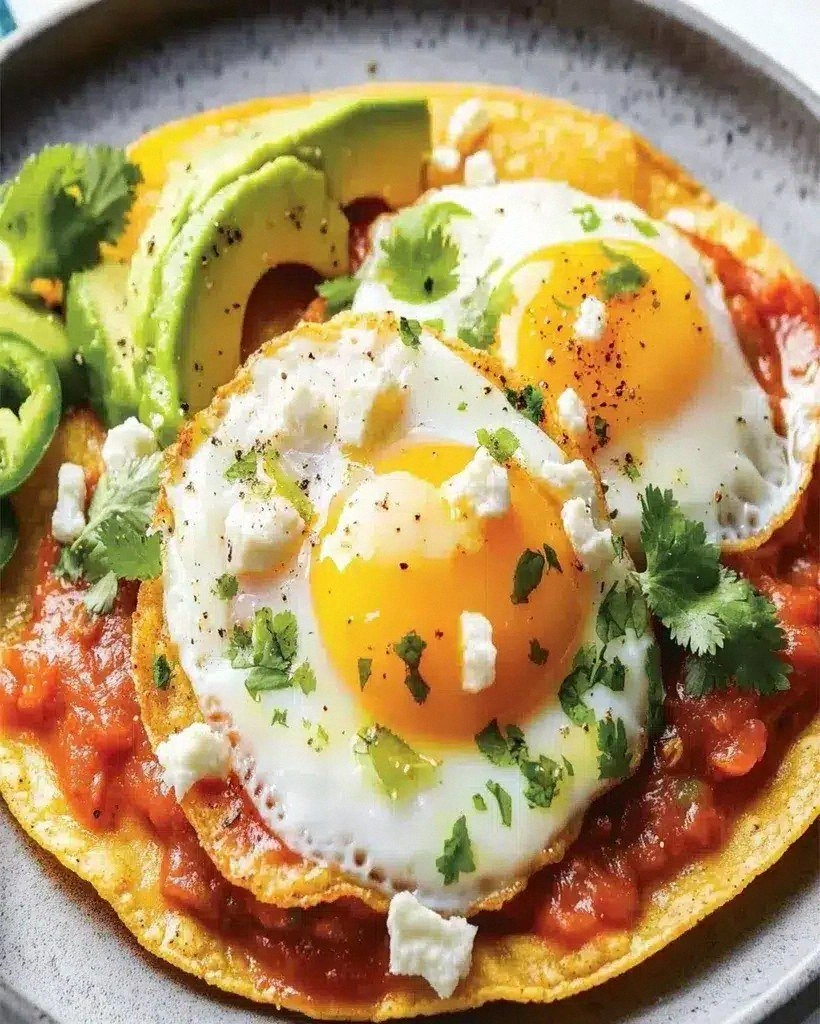
- Time to assemble while everything's still singing hot. Lay a crisp tortilla on each plate, spoon a thick layer of beans, and spread it to the edges like you're frosting a cake. Ladle on a generous puddle of salsa—it should hiss and sink into every crevice. Crown with an egg, then shower with cotija, cilantro leaves, and a final squeeze of lime. The cheese should melt on contact, the cilantro should wilt just enough to release its lemon-pepper perfume, and the lime's acid should sharpen every other flavor like a new set of knives.
- Serve immediately, preferably with strong coffee and a playlist that includes at least one song by Café Tacvba. Drag a fork through the yolk and watch it cascade into the salsa, creating an impromptu sauce that begs to be mopped with tortilla shards. That sizzle when it hits the pan? Absolute perfection. If you've ever struggled with this, you're not alone—and I've got the fix.
That's it—you did it. But hold on, I've got a few more tricks that'll take this to another level...
Insider Tricks for Flawless Results
The Temperature Rule Nobody Follows
Beans must be hot, tortillas warm, eggs just-set, and salsa at least room temp. Cold salsa on hot eggs tightens the yolk membrane and dulls flavors faster than a wet blanket. Keep the salsa in a small saucepan over the lowest flame while you fry; a gentle bubble every few seconds keeps it lively without turning it into ketchup. Conversely, if your beans cool, they stiffen into paste—whisk in a tablespoon of hot water to loosen them back into spoonable silk. Temperature synergy is what separates restaurant polish from home-cook hesitation.
Why Your Nose Knows Best
When the chili oil reaches the perfect infusing temperature (around 325°F), it smells like dried fruit and campfire—not acrid or bitter. If it starts to sting your throat, you've overshot and scorched the chiles. Immediately dump the oil (carefully) into a heat-proof bowl to cool; it'll salvage the flavor and save your smoke alarm from an existential crisis. A kitchen thermometer helps, but honestly, your nose is more accurate and doesn't need batteries.
The 5-Minute Rest That Changes Everything
After assembling, let the plates sit for exactly five minutes. I know, hungry people are circling like vultures, but this brief pause lets the salsa seep slightly into the tortilla, the cheese settle into a melty veil, and the yolk come down to a tongue-safe temperature. Cover loosely with foil so the top doesn't congeal. Use the time to pour drinks, snap photos, or practice saying "¡Buen provecho!" convincingly.
Season in Waves, Not Tsunamis
Salting the beans while they simmer seasons the inside, not just the surface. Salt the eggs only on top; salting the raw white can turn them watery. Finish with a whisper of flaky salt right before serving—those crunchy crystals hit your palate first, amplifying every other flavor like turning up the volume on a favorite song. Think of seasoning like a conversation, not a shouting match.
The Cotija Crumble Technique
Freeze the cotija for 15 minutes, then grate it on the fine side of a box grater. The cold crumbles into feather-light snow that melts instantly on hot food, giving you cheese in every bite rather than rubbery chunks. Bonus: the frozen cheese doesn't stick to the grater, so you won't lose half to culinary cling-wrap.
Creative Twists and Variations
This recipe is a playground. Here are some of my favorite ways to switch things up:
Green Monster Huevos
Swap the red salsa for a tomatillo-jalapeño version: broil tomatillos, jalapeños, and garlic until charred, then blend with avocado for creamy tang. The color is electric green, and the flavor is brighter than a spring morning. Top with toasted pumpkin seed dust for extra crunch. Kids love the color, adults love the depth.
Smoky Chipotle Chocolate
Add a teaspoon of unsweetened cocoa powder and a minced chipotle in adobo to the red salsa. The chocolate deepens the sauce, giving it a mole-like complexity without the day-long effort. It sounds weird until you taste it—then you'll wonder why every salsa doesn't have a cocoa backbone.
Breakfast-Burrito-Meets-Rancheros
Roll the beans, salsa, and egg into a crisp tortilla like a mini burrito, then sear the seam in the chili oil. You get handheld huevos perfect for car-pool mornings or standing-up brunches. Dip into extra salsa like a proud breakfast taquito.
Seafood Sunday Upgrade
Top each plate with a handful of butter-seared shrimp tossed in lime zest and chili powder. The sweet shrimp play off the smoky salsa like a beach vacation colliding with mountain campfire. Add a few slices of ripe mango for a tropical detour that'll have you dreaming of coastal Veracruz.
Vegan Power Play
Replace eggs with silken tofu slabs seared until golden, and drizzle with a garlicky cashew cream. The tofu absorbs flavors like a sponge, and the cashew cream gives you that rich mouthfeel without a single feather ruffled. Even carnivores inhale this version and ask for the recipe.
Brunch-Bowl Meal Prep
Layer cold salsa, room-temp beans, diced avocado, and a soft-boiled egg in mason jars. Grab, microwave 45 seconds, top with crushed tortilla chips. You've got a desk lunch that makes coworkers jealous and keeps you full until dinner. I prep five every Sunday; by Thursday I'm still excited to dig in.
Storing and Bringing It Back to Life
Fridge Storage
Beans and salsa keep beautifully for up to five days in airtight containers. Pour a thin film of oil on top of the salsa to prevent oxidation; it acts like culinary plastic wrap. Tortillas and eggs are best fresh, but if you must, store cooked tortillas in a zip bag with a paper towel to absorb moisture; reheat in a dry skillet until crackly again. Eggs don't reheat well—plan to fry fresh or make the vegan tofu version for leftovers.
Freezer Friendly
Both beans and salsa freeze like champs for three months. Portion into muffin tins, freeze solid, then pop out the pucks into a freezer bag. Two pucks equal one serving; thaw overnight in the fridge or microwave from frozen for 90 seconds. Tortillas freeze best in their original bag with all air pressed out; thaw on the counter for ten minutes or microwave wrapped in a barely-damp towel for 20 seconds.
Best Reheating Method
Add a tiny splash of water to beans before reheating—it steams back to creamy perfection. Warm salsa gently; boiling turns it muddy. For tortillas, toast directly over a gas burner for 10 seconds per side using tongs, until they smell like popcorn. No gas burner? A hot dry skillet works, but flip every 5 seconds to prevent burning. Assemble everything piping hot and dig in within five minutes for maximum crunch glory.