I was standing in my kitchen, staring at a sad, overcooked chicken breast that had turned into a rubbery disappointment. The air smelled of burnt garlic and regret. I remembered a friend’s rave review of a creamy pepperoncini chicken dish that had turned a bland dinner into a party. I decided to resurrect that memory, but with my own twist. I grabbed a skillet and set the stage for a culinary redemption. I promised myself that by the end of this post, you’ll have a dish that sings.
Picture this: a skillet sizzles as olive oil meets the pan, releasing a warm, buttery aroma that instantly lifts your mood. The pepperoncini peppers, with their bright green specks, begin to soften, their tangy bite dancing on your tongue. I dare you to taste this and not go back for seconds, because the sauce will coat the chicken like velvet. The heavy cream slides in, thickening into a silky blanket that embraces every piece. The chicken broth adds depth, a savory backbone that keeps the dish from feeling like a simple stew. Together, they create a harmony that makes every bite feel like a hug.
What sets this version apart is the precise balance between heat and creaminess, the gentle sear that locks in juices, and the subtle seasoning that lets the pepperoncini shine. I’ve tweaked the technique so the chicken never dries out, a common pitfall that many recipes ignore. The result is a dish that feels indulgent yet approachable, a crowd-pleaser that will have your guests asking for the recipe. I’ll show you how to achieve that perfect golden crust while keeping the interior tender. The sauce is rich enough to stand on its own but light enough to pair with pasta, rice, or crusty bread. By the end, you’ll wonder how you ever made it any other way.
The secret ingredient? A splash of lemon zest that brightens the cream without overpowering the pepperoncini’s subtle spice. I also use fresh parsley at the finish to add a pop of color and freshness that cuts through the richness. If you’re craving a lighter version, swap half‑and‑half for the heavy cream and watch the sauce still cling beautifully. Most recipes get this completely wrong by overcooking the chicken or using too much liquid. Here’s what actually works: sear, deglaze, simmer, and finish with a touch of acidity. Stay with me here—this is worth it.
I’ll walk you through every single step, from selecting the best chicken to the final garnish. Along the way, I’ll drop in micro‑challenges that will test your palate and keep you engaged. You’ll see how a simple skillet can transform into a stage for flavor fireworks. By the time you reach the last bite, you’ll feel like a kitchen maestro. Picture yourself pulling this out of the oven, the whole kitchen smelling incredible, and your guests erupting into applause. Let’s dive in and create something unforgettable.
What Makes This Version Stand Out
- Flavor Profile: The sauce marries creamy richness with a bright, peppery kick that lingers on the palate. The pepperoncini peppers provide a gentle heat that never overwhelms the delicate chicken. The lemon zest adds a citrusy lift that keeps the dish from feeling heavy.
- Texture: The chicken achieves a caramelized crust while remaining moist inside, thanks to a precise searing technique. The sauce coats the meat like velvet, creating a luscious mouthfeel. The pepperoncini bits add a pleasant snap that breaks the creaminess.
- Simplicity: All steps can be completed in a single skillet, reducing cleanup time. The ingredient list is short, making grocery shopping a breeze. No advanced techniques are required, so even novice cooks can succeed.
- Ingredient Quality: Fresh, high‑quality chicken breast provides the best flavor and texture. Using whole pepperoncini peppers instead of canned preserves their natural tang. A good olive oil and heavy cream elevate the dish to restaurant‑level.
- Crowd Appeal: The dish balances bold flavor with comforting creaminess, making it suitable for family dinners or dinner parties. The bright green peppers and parsley garnish add a visual pop that impresses guests. It pairs well with a variety of sides, from pasta to mashed potatoes.
- Cooking Method: The sear‑then‑simmer technique locks in juices and builds depth. Deglazing the pan with broth pulls out caramelized bits that enrich the sauce. The finishing touch of lemon zest brightens the final flavor profile.
- Make‑Ahead Potential: The skillet can be prepared a few hours ahead and refrigerated; the sauce will thicken slightly but remains luscious. Reheating gently restores the silky texture. The dish can also be frozen in portions for future use.
Inside the Ingredient List
The Flavor Base
Chicken breast is the star, delivering a lean, protein‑rich foundation that absorbs the sauce’s flavors. Choosing boneless, skinless breasts keeps the dish light and ensures even cooking. If you prefer a more robust taste, swap the breasts for thighs; they’ll stay juicy and add depth.
Pepperoncini peppers provide the signature zing. Their mild heat and bright green color make the dish visually appealing and add a subtle spice that complements the cream. If you’re a heat lover, leave the seeds intact; for a milder version, remove them before chopping.
The Texture Crew
Heavy cream creates the silky, indulgent sauce that coats the chicken. It thickens when heated, giving the dish a luscious mouthfeel. For a lighter version, swap half‑and‑half; the sauce will still cling beautifully but with fewer calories.
Chicken broth deepens the sauce’s flavor profile, adding savory complexity without overpowering the cream. Homemade broth is ideal, but a quality store‑bought option works just fine. The broth also helps keep the chicken moist during simmering.
The Unexpected Star
Olive oil is the healthy fat that sears the chicken and prevents sticking. Its fruity notes enhance the overall taste. If you prefer a richer flavor, substitute butter; the result will be richer but slightly heavier.
Garlic powder brings a warm, savory undertone that balances the pepperoncini’s brightness. Fresh garlic can be used for a more robust flavor, but powder offers convenience and consistency.
The Final Flourish
Salt and pepper are essential for seasoning; they bring out the flavors of every ingredient. Use kosher salt for even distribution and freshly ground pepper for a bright aroma. Adjust to taste, but start with a teaspoon of salt and half a teaspoon of pepper per serving.
Fresh parsley adds a pop of color and a fresh, herbaceous finish that cuts through the richness. Chop it finely so it disperses evenly across the dish. A small pinch of lemon zest at the end brightens the overall profile and adds a subtle citrus note.
Everything’s prepped? Good. Let’s get into the real action.
The Method — Step by Step
- Begin by patting the chicken breasts dry with paper towels; this ensures a clean sear. Season both sides generously with salt, pepper, and a pinch of garlic powder. Let the seasoned chicken rest for 5 minutes to allow the flavors to penetrate. This step is crucial for a flavorful crust. The chicken should look slightly pink on the outside when it’s ready to hit the pan.
- Heat a large skillet over medium‑high heat and add the olive oil. Wait until the oil shimmers, then slide the chicken in, breast side down. The pan should hiss, indicating the oil is hot enough. Sear the first side for about 4–5 minutes until a golden crust forms. Flip carefully with tongs to avoid tearing the meat.
- Add the pepperoncini peppers to the pan, allowing them to mingle with the seared chicken. They’ll release their juices, creating a subtle sauce base. This is the moment where the aroma turns from ordinary to enticing. Keep the heat moderate so the peppers soften without burning. The peppers should look bright green and slightly translucent.
- Deglaze the pan with a splash of chicken broth, scraping up the browned bits from the bottom. These bits are flavor gold and will enrich the sauce. Allow the broth to reduce slightly, concentrating its savory profile. This step also helps prevent the sauce from becoming too watery. The pan should look glossy and ready for the next addition.
- Pour in the heavy cream, stirring gently to combine. The cream should swirl into the broth and peppers, forming a silky mixture. Reduce the heat to medium‑low and let the sauce simmer for about 5 minutes. Watch for a gentle bubble that indicates it’s thickening. The sauce should coat the back of a spoon.
- Return the chicken breasts to the skillet, nestling them into the sauce. Spoon some sauce over the top to keep the meat moist. Simmer for an additional 8–10 minutes, or until the chicken reaches an internal temperature of 165°F. The sauce should cling to the chicken like a velvet coat. This step ensures the chicken is juicy and fully cooked.
- Add a pinch of lemon zest and a handful of chopped parsley to brighten the dish. The zest lifts the richness, while the parsley adds a fresh, herbal note. Stir gently to distribute the flavors evenly. This final touch transforms the dish from comforting to celebratory. The aroma should be bright and inviting.
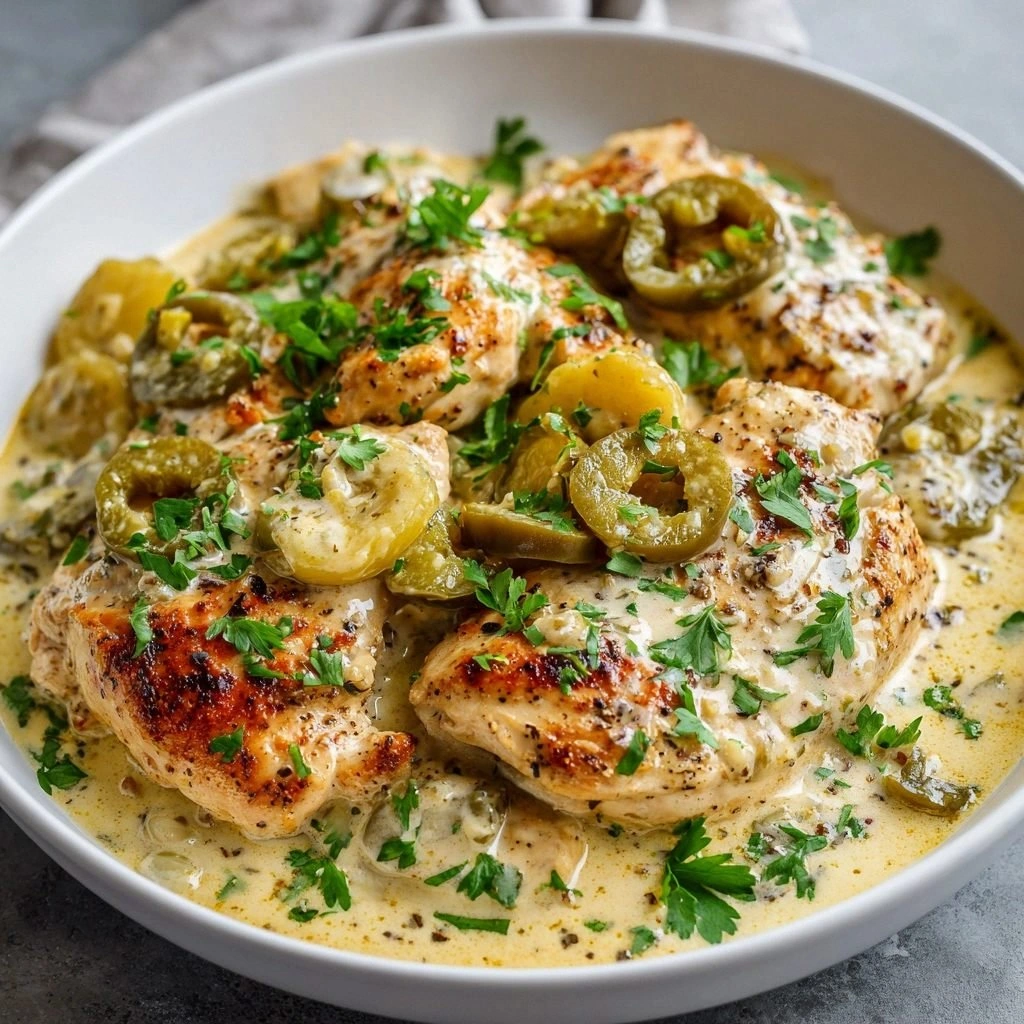
- Plate the chicken and ladle the creamy sauce over each piece. Garnish with extra parsley if desired. Serve immediately with your choice of side—pasta, rice, or a crusty baguette. The dish should look glossy and inviting. Take a moment to appreciate the steam rising from the skillet.
- Optional: For an extra layer of flavor, drizzle a teaspoon of Dijon mustard into the sauce before the final simmer. The mustard adds a subtle tang that complements the pepperoncini. Stir well to incorporate. This small addition elevates the dish to a new level of sophistication. It’s a quick trick that impresses even the most discerning palate.
That’s it — you did it. But hold on, I’ve got a few more tricks that’ll take this to another level.
Insider Tricks for Flawless Results
The Temperature Rule Nobody Follows
Many cooks jump straight to high heat, but the secret to a perfect sear is a steady medium‑high flame that allows the Maillard reaction to happen without burning. Keep the skillet preheated until it’s hot but not smoking. This ensures a golden crust that locks in juices.
Why Your Nose Knows Best
Before you even taste the sauce, sniff it. A bright, citrusy aroma signals that the lemon zest has kicked in. If it smells flat, let it simmer a bit longer; the flavors need time to meld.
The 5‑Minute Rest That Changes Everything
Once the chicken is removed from the skillet, let it rest on a plate for five minutes. This allows the juices to redistribute, ensuring each bite stays moist. Skipping this step can leave the meat dry.
Use Fresh vs. Canned Pepperoncini
Fresh pepperoncini have a brighter, more vibrant flavor compared to canned. They also have a firmer texture, which adds a pleasant bite. If you’re in a pinch, canned works, but the fresh version is a game‑changer.
The Secret of a Thick Sauce
If your sauce seems thin, let it simmer uncovered for a few minutes. The evaporation will naturally thicken it. Alternatively, whisk in a tablespoon of flour or cornstarch dissolved in water to create a slurry.
Finishing Touch: A Dash of White Wine
Adding a splash of dry white wine before the cream creates a subtle acidity that balances the richness. Let the wine reduce for a minute before adding the cream to avoid a winey aftertaste. It adds depth without overpowering the dish.
Creative Twists and Variations
Mediterranean Mushroom Medley
Swap the pepperoncini for sautéed mushrooms and add a splash of white wine. The earthy mushrooms pair beautifully with the cream, creating a rich, savory profile. This variation is perfect for mushroom lovers and adds a hearty texture. Serve over polenta or gnocchi for a comforting meal.
Spicy Cajun Kick
Add a tablespoon of Cajun seasoning to the chicken before searing. The smoky heat complements the pepperoncini’s mild spice. This version brings a bold, Southern flair that’s sure to impress. Pair with cornbread to finish the theme.
Herb‑Infused Lemon Parmesan
Finish the sauce with grated Parmesan and a handful of chopped basil. The cheese adds a nutty depth, while the basil offers a bright, aromatic finish. This twist turns the dish into a classic Italian comfort meal. Serve over linguine for a complete experience.
Vegan Version
Replace chicken with tofu or tempeh, and use coconut milk instead of heavy cream. The coconut milk gives a subtle sweetness that balances the pepperoncini. This plant‑based take is both healthy and flavorful. Serve with quinoa or rice for a wholesome meal.
Breakfast‑Style Skillet
Add diced potatoes and spinach to the skillet, then fold in the chicken and sauce. This hearty breakfast dish is perfect for weekend brunches. The potatoes absorb the sauce, creating a comforting, all‑in‑one plate. Serve with a side of fresh fruit.
Gluten‑Free Delight
Serve the skillet over cauliflower rice or a bed of sautéed greens. The low‑carb base keeps the dish gluten‑free without sacrificing flavor. This variation is ideal for those watching their carbohydrate intake. Pair with a crisp white wine for a balanced meal.
Storing and Bringing It Back to Life
Fridge Storage
Cool the skillet to room temperature before transferring the dish to an airtight container. Store in the refrigerator for up to 3 days. The sauce will thicken slightly, but it remains luscious. Reheat gently on the stovetop, adding a splash of water if needed.
Freezer Friendly
Divide the skillet into portioned containers and freeze for up to 2 months. Thaw overnight in the refrigerator before reheating. The creamy texture may separate slightly, but stirring restores its silkiness. This method is perfect for meal prepping.
Best Reheating Method
Reheat on low heat, stirring frequently to prevent separation. Add a tablespoon of water or broth to restore moisture. Bring to a gentle simmer until heated through. The sauce should regain its silky sheen, and the chicken will stay juicy. Serve immediately after reheating for the best experience.